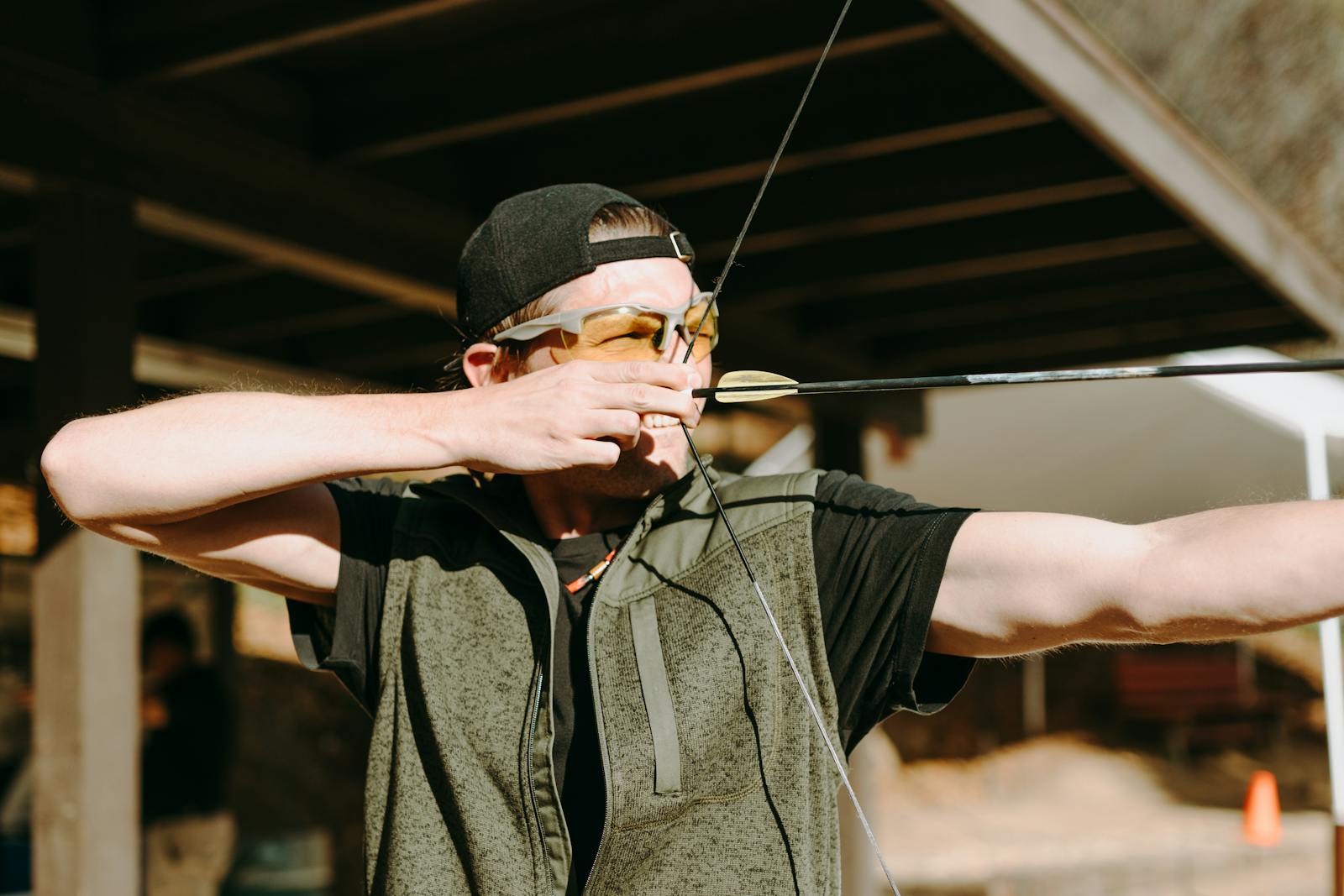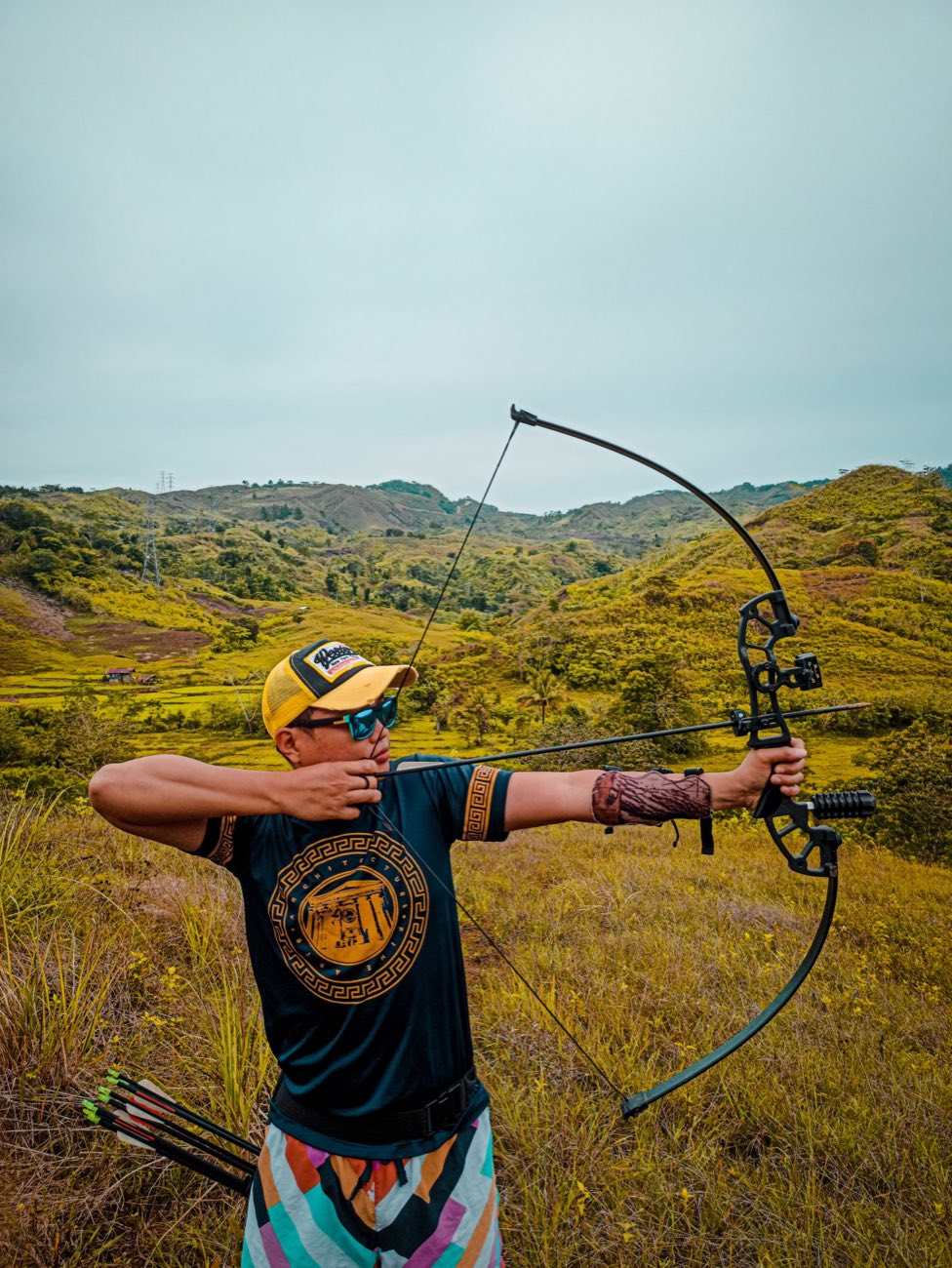
Five measurable levers keep coming up: postural stability, release kinematics, gaze control, heart rate variability, and load management. The release lasts 12 to 15 milliseconds, and elites vary its duration by about a millisecond against two or three times that in intermediates. Quiet eye lasts 2 to 3 seconds in elites, 0.5 to 1.5 in intermediates, and consistency counts more than duration. The method is one variable at a time, measured before and after.
"How do I improve my score?" The answer nearly everyone gets is always the same: change your anchor point, raise your bow elbow, breathe better, advice that is often perfectly valid but remains opinion. Over the past fifteen years, sport science has begun to measure precisely what actually separates an elite archer from an intermediate one, and the answers do not always match what circulates at the range.
What follows is a summary of the five variables the research returns to most consistently. It is not a complete list, since performance depends on too many things for any single synthesis to contain them all, but these are the levers that, applied with method, shift the score in ways that can be demonstrated. For each one you will find the real numbers, the tools to measure it, and, most importantly, what to do with it in practice if you want to stop training at random.
Before getting into the substance, though, one thing needs to be said: none of these five variables exists in isolation. Stability depends on strength, strength on recovery, recovery on sleep, and sleep on how much load you have accumulated during the week. You will see them one at a time, because that is the only way to explain them clearly, but the real breakthrough comes when they begin to interact. This is why, when I work with an archer, I never look at a single aspect in isolation from the rest.
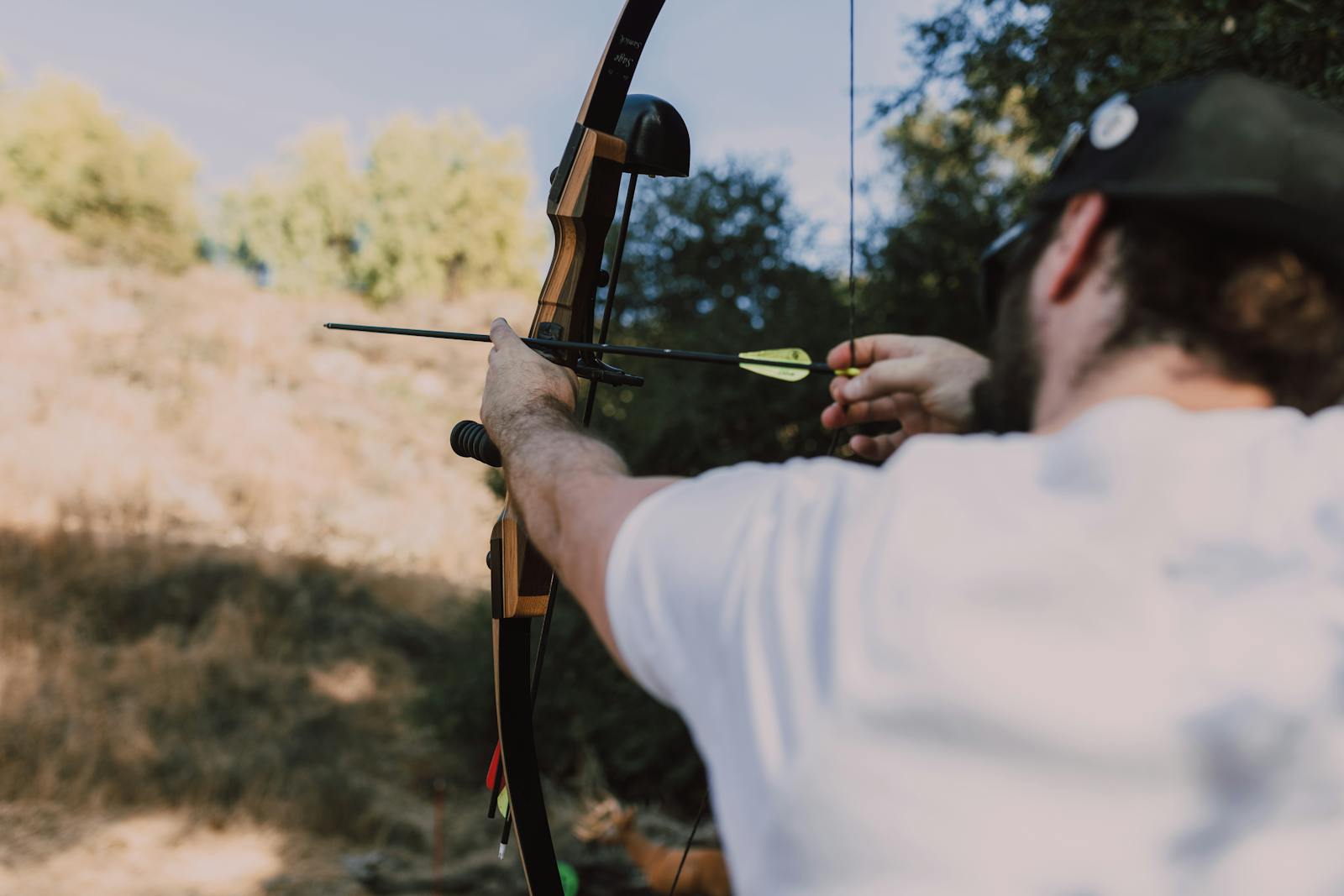
1 · Postural stability: what the body does before the release
How still the body remains in the seconds before the release is one of the signals that most reliably predicts the final score. The way to measure it is the centre of pressure, the COP: in practice, the archer stands on a force plate and you observe how much their weight sways over their feet while they hold at full draw. The relationship with performance is clear and runs in one direction only: the less the COP sways, the higher the average scores. Biomechanical studies confirm this consistently: lateral sway in the three seconds preceding the release is inversely related to score, with an association that falls consistently in the moderate-to-strong range.
There is more to it: the body of an experienced archer does not wait for the release to organise itself, it anticipates it. In the 150 to 300 milliseconds before the release, the core, lower trapezius, and scapular stabilisers activate in a precise sequence, always the same, arrow after arrow. In a beginner, this preparation is fragmented and disordered, and it is one of the most reliable indicators for assessing, beyond the score, where an athlete actually stands.
The difference is visible even without exact numbers: in studies that compared archers of different levels using force plates, the COP area covered by elite archers was considerably smaller, on the order of a few tens of square millimetres, while in intermediate archers it was several times larger, up to a full order of magnitude greater. The precise values vary across studies and methodologies, but the direction is consistent. And that difference lands directly on the target, because a swaying body is, very simply, a swaying sight picture.
The gap comes primarily from three things. The first is isometric strength of the shoulder girdle and core, the kind that holds alignment together under the uneven load of a bow with 18 to 22 kg of draw weight. The second is proprioception: the nervous system's ability to detect micro-oscillations and correct them in real time, before they even become visible. The third is breathing: elite archers tend to release as the exhalation ends, when the diaphragm is relaxed and the thorax is in its most stable position.
The good news, and it is not a minor point, is that stability can be trained. Core training, work on unstable surfaces, thoracic mobility, pilates adapted for archers: the protocols show solid effects, with measurable improvements in competition scores after as little as 6 to 12 weeks. The exact magnitude varies considerably across studies and populations, and cannot be reduced to a single percentage figure. But in a sport where everything comes down to a handful of points, even a modest gain matters.
2 · Release kinematics and muscle synergies
The release, on average, lasts between 12 and 15 milliseconds, and in that blink of an eye dozens of muscles must activate and deactivate in a very precise sequence. Placing electrodes on the skin and reading muscular activity during the shot reveals a clear picture: the experienced archer activates the scapular muscles, lower trapezius, rhomboids, and infraspinatus earlier and more consistently, and cleanly disengages the finger flexors at the exact moment of release.
In the intermediate archer two problems recur, and the first is co-contraction: muscles that should be silent activate alongside their antagonists, the biceps pulling while the triceps pushes, on the bow arm. The result is tremor, energy that dissipates, a sight picture that moves. Measured with electromyography, this biceps co-contraction is markedly higher in intermediate archers than in elite archers, where it remains close to zero.
The second problem is premature activation of the finger flexors: instead of simply letting the string go, the fingers push it forward, introducing torque. Almost no one does this intentionally: it is a protective reflex, the nervous system trying to control a movement that should remain passive. And this is the point: a skilled archer's release is not performed, it is allowed to happen.
Another telling signal is how much the duration of the release varies from one arrow to the next. In elite archers the variation is on the order of a single millisecond; in intermediate archers it is two or three times wider. This seems trivial, but at 70 metres even one millisecond of timing variation can translate to 2 to 3 centimetres on the target, the difference between a ten and a nine.
On one point the research leaves no doubt: release consistency is not taught through words. Saying "release more softly" is not enough. It is built through external feedback: slow-motion video, real-time electromyography, work with light loads, a well-set clicker. Studies on motor learning are explicit: focusing on something external, the movement of the bow, the target, produces better learning and retention than focusing on one's own body, the muscles, or the movement itself.
A good release does not come from thinking about it. It comes from training the sequence until it is automatic.
Motor learning research indicates that consciously trying to control the release actually degrades performance in experienced archers. Mastery means withdrawing attention from the movement, not adding more. It is a paradox that unsettles many intermediate archers, but it is one of the most robust findings in the motor control literature.
3 · Visual training: training the gaze
Among the most compelling research directions of recent years in precision sports is the study of gaze behaviour. The most thoroughly investigated phenomenon is the quiet eye: a stable fixation on a specific point of the target in the seconds before the release. Fitting archers of different levels with eye-trackers has revealed a very consistent pattern: elite archers show a longer quiet eye, on the order of 2 to 3 seconds, and above all a more consistent one; intermediate archers typically hold fixation for 0.5 to 1.5 seconds, and with considerably more variability.
But average duration alone matters less than the consistency with which it is repeated. An archer with a mean quiet eye of 2.5 seconds but erratic timing, one arrow at 4 seconds, the next at 1, shoots worse than someone who holds steady at 2 seconds but the same every single arrow, which is why the metric to follow is repeatability rather than the absolute number.
And gaze training does not end with the quiet eye, since there are other things that are measurable and trainable. There is dynamic acuity, keeping a sharp image while the eye makes its natural micro-movements, which is related to score and improves with tracking exercises. There is binocular coordination, particularly the near point of convergence: if it is limited, the sight picture suffers. And there is anticipation, catching the exact moment when the sight passes over the gold, which is trained with time-on-target exercises.
The results of these protocols in precision sports are encouraging: 4 to 8 weeks of targeted work has produced score improvements in the range of a few percentage points in intermediate-to-advanced archers. The numbers vary considerably across studies and contexts, but the direction is consistent. To put this in perspective: in a sport where two athletes of similar level are often separated by 3 to 5%, even a gain attributable to the quiet eye alone is already meaningful.
There are, however, three errors I see made repeatedly. The first is treating visual work as an add-on to do at home, separately: it only works when integrated into real shooting. The second is looking only at quiet eye duration and ignoring its consistency, which is what actually counts. The third is skipping the baseline assessment: many archers start training the quiet eye without ever having had a functional optometric evaluation, and may have a structural limitation, limited convergence or uncertain eye dominance, that alone is enough to undermine any protocol.
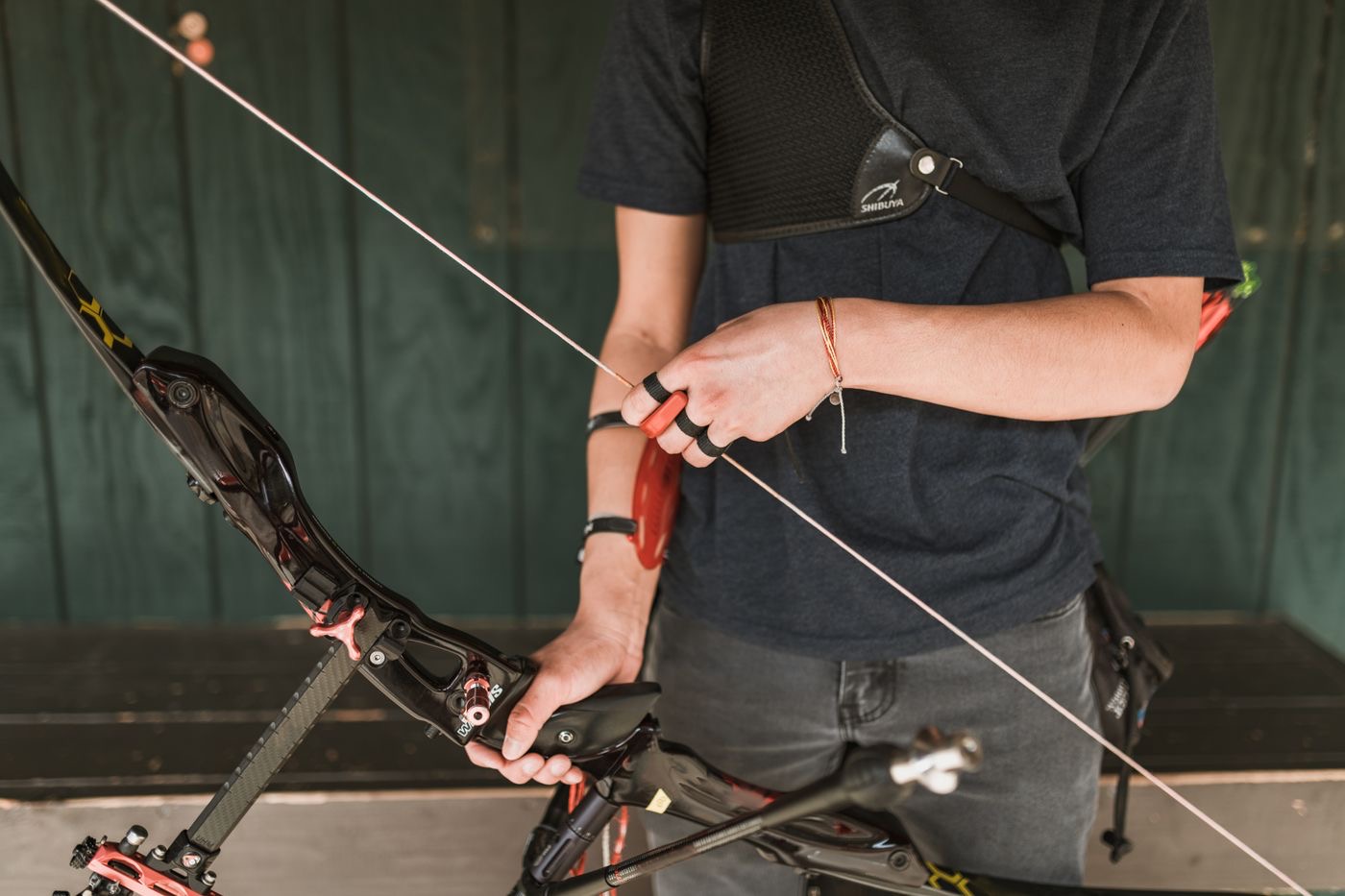
4 · Heart rate variability: the physiological window into performance
Heart rate variability, HRV, the degree to which the interval between successive heartbeats fluctuates, is one of the most extensively studied indicators in precision sports today, and in elite archers it displays three recurring characteristics. At rest, parasympathetic tone is higher, a sign that recovery is functioning well and the system is in the state that can be called alert calm. In the seconds before the release, heart rate drops measurably, the so-called cardiac cycle synchronisation, and the arrow almost always departs precisely as the heart is decelerating. Between arrows, HRV recovers more quickly: a sign of a more resilient autonomic nervous system.
There is an optimal arousal window, neither too low nor too high: too low means drowsiness and fading attention, too high means tremor and a sight picture that will not settle. This is the old inverted-U relationship between arousal and performance, known for more than a century. Elite archers learn, often without being aware of it, to stay within that window; intermediate archers tend to leave it, upward during competition through anxiety, and downward during long training sessions through accumulated fatigue.
The archery data confirm this: at the same technical level, pre-shot RMSSD (one of the HRV indices) is higher in elite archers than in intermediate archers. And in the 3 to 5 seconds before release, elite archers show a cardiac deceleration of 10 to 20 beats per minute relative to their baseline, a phenomenon that is almost absent in intermediate archers.
Today HRV can be measured with low-cost wearables. Tracking it in the 24 hours before competition, or between sets in training, provides an objective read on how ready the body is. It is not a magic indicator: it varies enormously between individuals, and a single value means little, but its trends over time add a piece of information that feel alone does not provide.
Three caveats are worth keeping in mind, though. The first is that before interpreting any value you need a personal baseline built over 2 to 4 weeks, otherwise there is nothing to compare against. The second is that sleep, hydration, menstrual cycle and even ambient temperature influence HRV independently of training, so it has to be read in the context of the day. The third, and the most important, is that HRV sits alongside what the athlete feels rather than replacing it.
5 · Training load and periodization
The last lever is the one amateur archers most often ignore, and it is also the one that weighs most heavily on performance over an entire season: load management. In endurance sports and skill sports the same pattern recurs: performance does not grow in a straight line, but in cycles of loading, recovery, and supercompensation. Shooting more does not automatically mean improving more. On the contrary: beyond a certain threshold, which is individual, weekly arrow volume causes performance to fall rather than rise.
The signs that you have crossed that threshold are well known and recognisable: the bow arm trembles more in the final sets, aiming time lengthens (and quiet eye shortens), pain or tension in the rotator cuff, shoulder girdle, or forearm flexors does not resolve. Then motivation drops, sleep deteriorates, morning HRV declines, and these are all different ways the body is saying the same thing: it needs to unload, not add more volume.
Periodization is precisely the discipline that addresses this: organising training into cycles, long, medium, and short, alternating volume, intensity, technical work, and recovery phases. It has existed for decades in endurance and strength sports, codified by the Eastern European school and subsequently refined by modern research. In archery it has arrived only recently, but the evidence is already clear: with the same talent and hours invested, those who plan win more often than those who train by feel.
The estimated effect is not small: comparing archers following periodized training against those following generic training, the differences in annual average score can be meaningful at the same total volume, an indicative estimate but one consistent with what is observed in endurance and skill sports where periodization has long been established. The advantage does not come because the former train more, but because they train better: higher quality per hour, fewer injuries, and peak form arriving precisely when the important competitions demand it.
For the archer specifically, three aspects of periodization are worth keeping in mind. Variety: working at different distances, targets, and conditions, rather than repeating the same scenario indefinitely. The deload week every 3 to 4 weeks of loading, with volume cut by 40 to 60% while maintaining technical quality. And the taper before competition: in the 10 to 14 days beforehand, volume drops further to give the body time to supercompensate and arrive in peak condition.
From measurement to intervention: the methodological cycle
The five levers described here have one thing in common worth underscoring: they can all be measured, and with accessible tools. All it takes is a wearable eye-tracker for quiet eye, a chest strap for HRV, a high-speed camera for release analysis, a force plate or even functional field tests for posture, a well-kept training log for load. But the real strength of a scientific approach is not the tool itself: it is the method the tool allows you to follow.
It is a five-step cycle that repeats over time. Observe: collect data on where the athlete actually is, without preconceived ideas. Measure: convert those observations into objective, repeatable numbers. Interpret: understand what those numbers mean, relative to the baseline or to reference values from the literature. Intervene: select a single targeted intervention, the one the interpretation suggests. And finally verify: re-measure after an appropriate interval to see whether the intervention actually worked.
This is the real difference between training by intuition and training with method. Those who rely on intuition try ten things at once, based on a feeling or someone's advice, and never measure the effect of any of them. The method proceeds one variable at a time, measures before and after, and accepts that certain hypotheses will turn out to be wrong. And paradoxically, that is its greatest strength: it does not promise immediate improvements, but it prevents you from wasting months chasing approaches that lead nowhere.
Typical cases: how the five levers manifest
To make all of this concrete, here are three profiles of intermediate archers I encounter frequently, each with their own combination of levers already unlocked and levers still closed. These are invented archetypes, of course, but built on patterns that recur in practice.
The posturally unstable archer
Has been shooting for 4 to 5 years, trains technique consistently, but competition score is always 30 to 50 points below training performance.
Postural analysis reveals a COP area twice the benchmark for the level, with an inconsistent breathing strategy. The mental load of competition increases tension, which degrades stability, which collapses the score.
The archer with variable release
Has been shooting for 7 years and has worked extensively on technique with multiple coaches. Average score is high but the standard deviation between ends is wide: some ends excellent, others well below average.
sEMG analysis reveals variable biceps/triceps co-contraction and inconsistent release timing from one arrow to the next.
The archer with a short quiet eye
Has been shooting for 3 years, has clean technique and a solid physical foundation, but struggles to close ends with consistent quality in competition.
Eye-tracker analysis reveals a mean quiet eye of 0.9 seconds, against a target of 2 seconds for the level. Under pressure the quiet eye collapses further, and the score follows.
These three portraits illustrate clearly why a one-size-fits-all prescription does not work. The five levers apply to everyone, but the order in which they matter varies from person to person. This is the purpose of an initial assessment: identifying which lever is the critical one for you, right now, and avoiding wasted effort on interventions that in your specific case move very little.
Stable posture, coordinated release, trained gaze, regulated physiology, programmed load. Five levers, each trainable independently with measurable effects. Performance does not reside in any one of them: it lives in their integration.
The common thread: from sensation to data
What holds the five levers together is not their nature, since one is biomechanical, one physiological and one cognitive, but the fact that all of them can be described in the same way: with an objective number, obtained with accessible and reliable tools. None of them asks you to feel something; they all ask you to look at a piece of data.
For an archer accustomed to working by feel, this is a shift that is not trivial. Measuring means accepting that one's own perceptions can mislead, and sometimes they mislead badly. It also means accepting that improvement is not visible session by session, but is rather a slow shift in the averages. A single arrow says little and a week of arrows begins to say something, while three months, alongside data on HRV, sleep, load and visual work, say nearly everything you need to know.
That shift from sensation to data is what separates shooting a lot from training with method, and today the tools to make that shift exist, and they are no longer the preserve of Olympic laboratories: in recent years the market has filled with wearable eye-trackers, consumer-grade HRV chest straps, low-cost video analysis software, and force plates now turn up at a growing number of assessment centres. The technological barrier has dropped considerably.
What remains is the barrier of method: knowing what to measure, how to read the data, how to translate it into interventions that actually work, on the body and on technique. This is the job of a performance analyst, and it is the reason MCPerformance exists. The five levers are the starting point. The rest is method, consistency, and the humility to accept that some technical conviction we have carried for years is, sometimes, simply wrong.
Frequently asked questions
Which variables actually improve your archery score?
There are five measurable levers the research has produced the most data on and that, in my experience, move the score: postural stability, release kinematics, visual training, heart rate variability, and load management. They are not the only possible list, and the research does not treat them as a closed ranking: they appear together here because they are the ones easiest to measure and can be trained one at a time.
Why does postural stability matter so much for the score?
How stable the body stays around the moment of release is among the signals the research links to the score, though not always cleanly: the studies agree more on the direction than on the exact strength of the link. In general, the less the centre of pressure sways, the higher the average scores. And stability can be trained: with core training and work on unstable surfaces you see improvements within six to twelve weeks.
Can you improve your score without expensive equipment?
Yes. In recent years the tools have become accessible: wearable eye-trackers, consumer-grade HRV straps, low-cost video analysis software, force plates in assessment centres. The real barrier is no longer the price, it is the method: knowing what to measure and how to turn the data into interventions that work.
How long does it take to see results from data-based training?
The improvement is not visible session by session, but as a slow shift in the averages. A single arrow says little. A week of arrows starts to say something. A month says a lot. A few months, alongside data on HRV, sleep, load, and visual work, say almost everything. You have to accept that perceptions sometimes deceive.
Is it better to work by feel or with method?
Those who go by intuition try ten things at once and never measure the effect of any of them. Method proceeds one variable at a time, measures before and after, and allows for certain hypotheses turning out to be wrong. The cycle is always the same: observe, measure, interpret, act on one thing only, and verify by re-measuring after the right amount of time.
Further reading. What you read here rests on the scientific literature. To keep the text readable I do not cite individual studies inline, but you will find the full reference list, over 120 studies and books, on the dedicated page.
Go to the bibliographySome things I take on directly.
I work on training and functional rehabilitation, on injury prevention and recovery, and on research. If you have a project or a collaboration in mind, or a question left over from what you have just read, write to me: I answer myself.