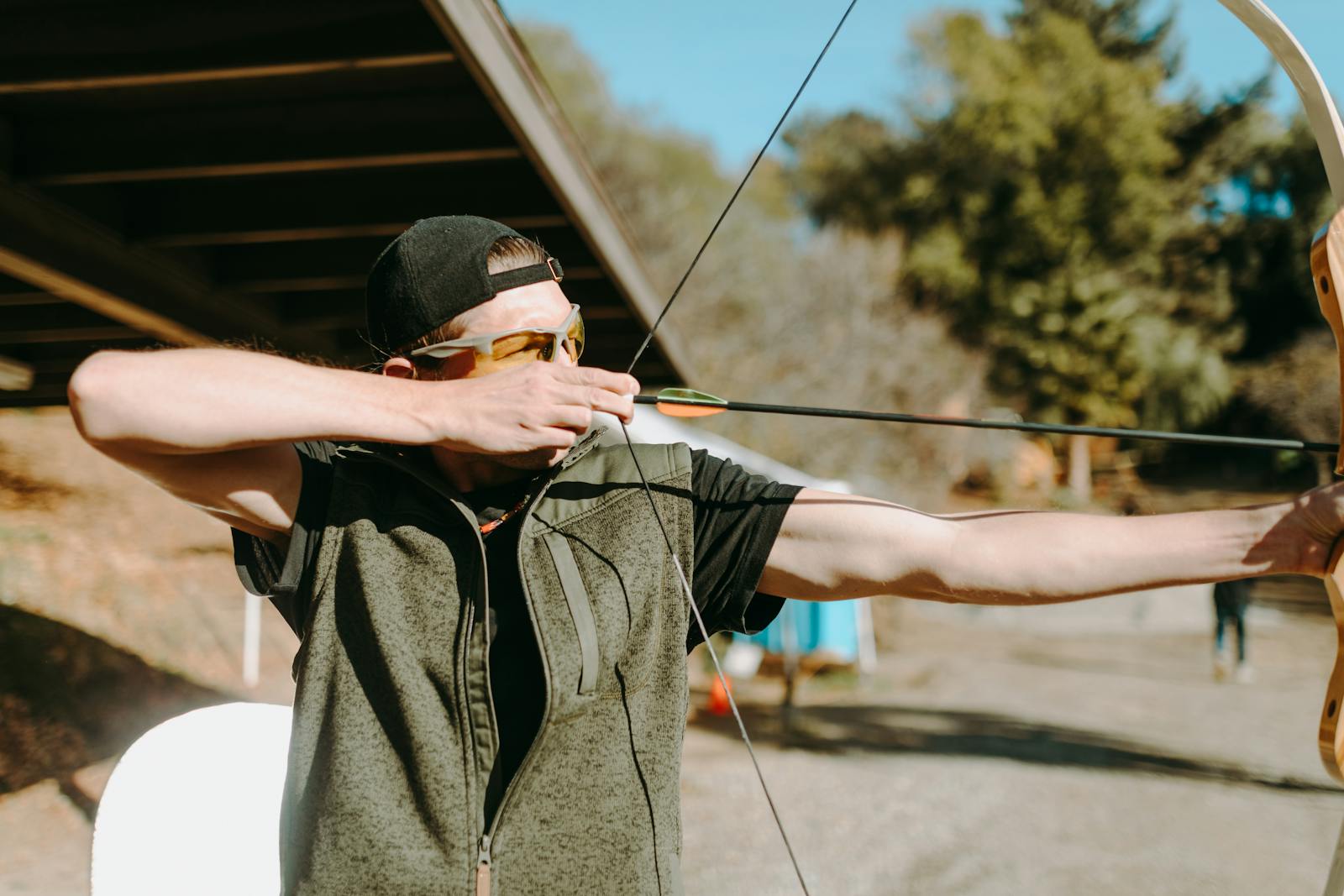
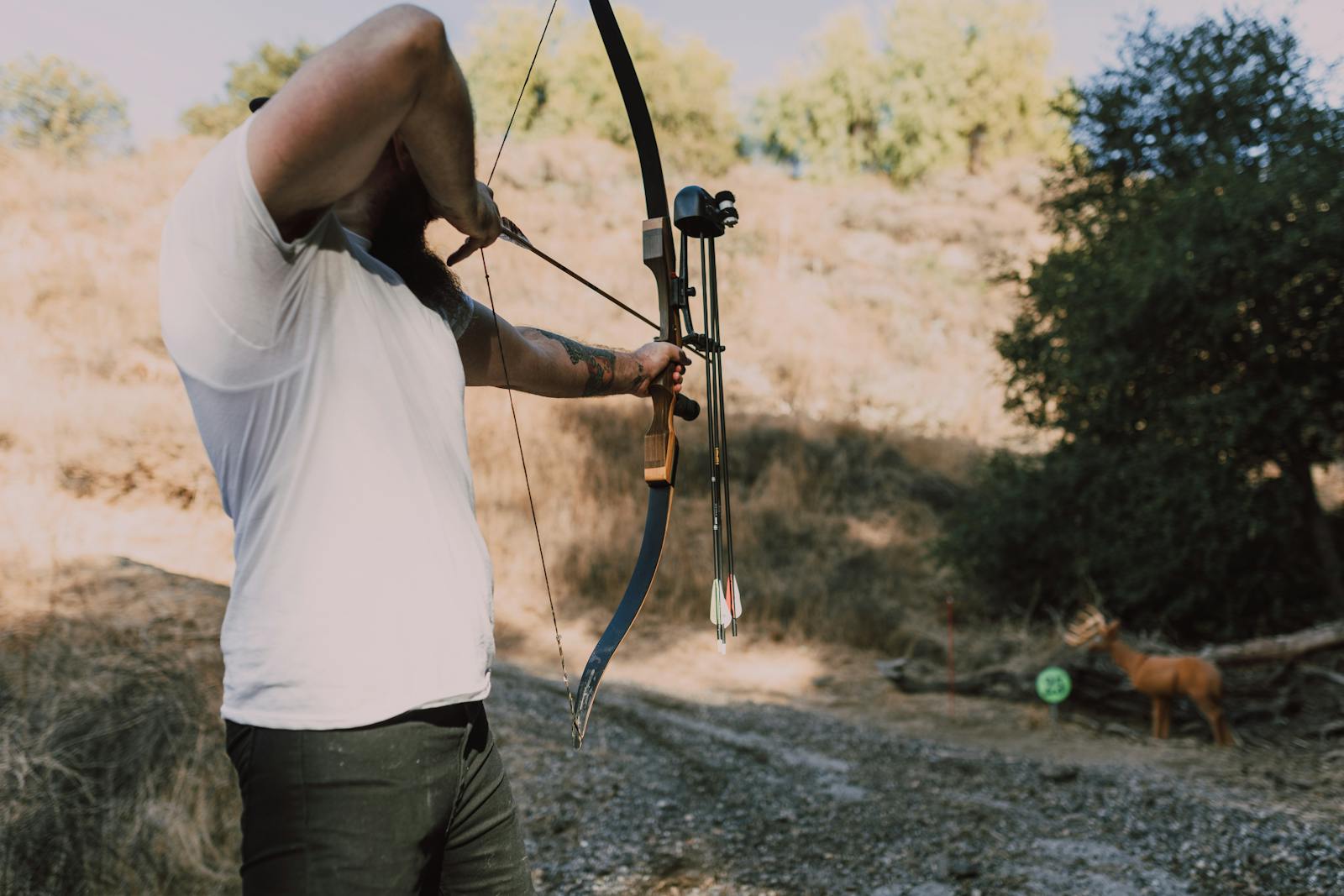
Part of the complete guide: How to improve your archery score
Learning runs through three stages: cognitive, 2 to 8 weeks, associative, 3 to 12 months, then autonomous, where control migrates to the cerebellum and basal ganglia. Full automaticity takes something like 10,000 quality repetitions as an order of magnitude, and 60 attentive arrows are worth more than 200 shot distracted. Change one technical element at a time and give it 4 to 6 weeks to settle; consolidation happens during sleep, not during extra repetitions.
When you learn a new technical movement, a different anchor, a modified breathing pattern, an updated pre-shot routine, your brain follows a predictable path, one that has been studied in depth. The classic model, formulated in the late 1960s and confirmed by thousands of subsequent studies, describes three distinct stages: cognitive, associative, and autonomous. Each has its own neural signature, and each calls for a different approach to practice.
Understanding these three stages is what separates intelligent training, the kind that leaves improvements that stick, from unfocused training that does nothing but reinforce existing errors. This article looks at what actually happens in the brain during each stage, how long each stage typically lasts in archery, the most common mistakes that slow everything down, and the principles of deliberate practice that, by contrast, accelerate consolidation.
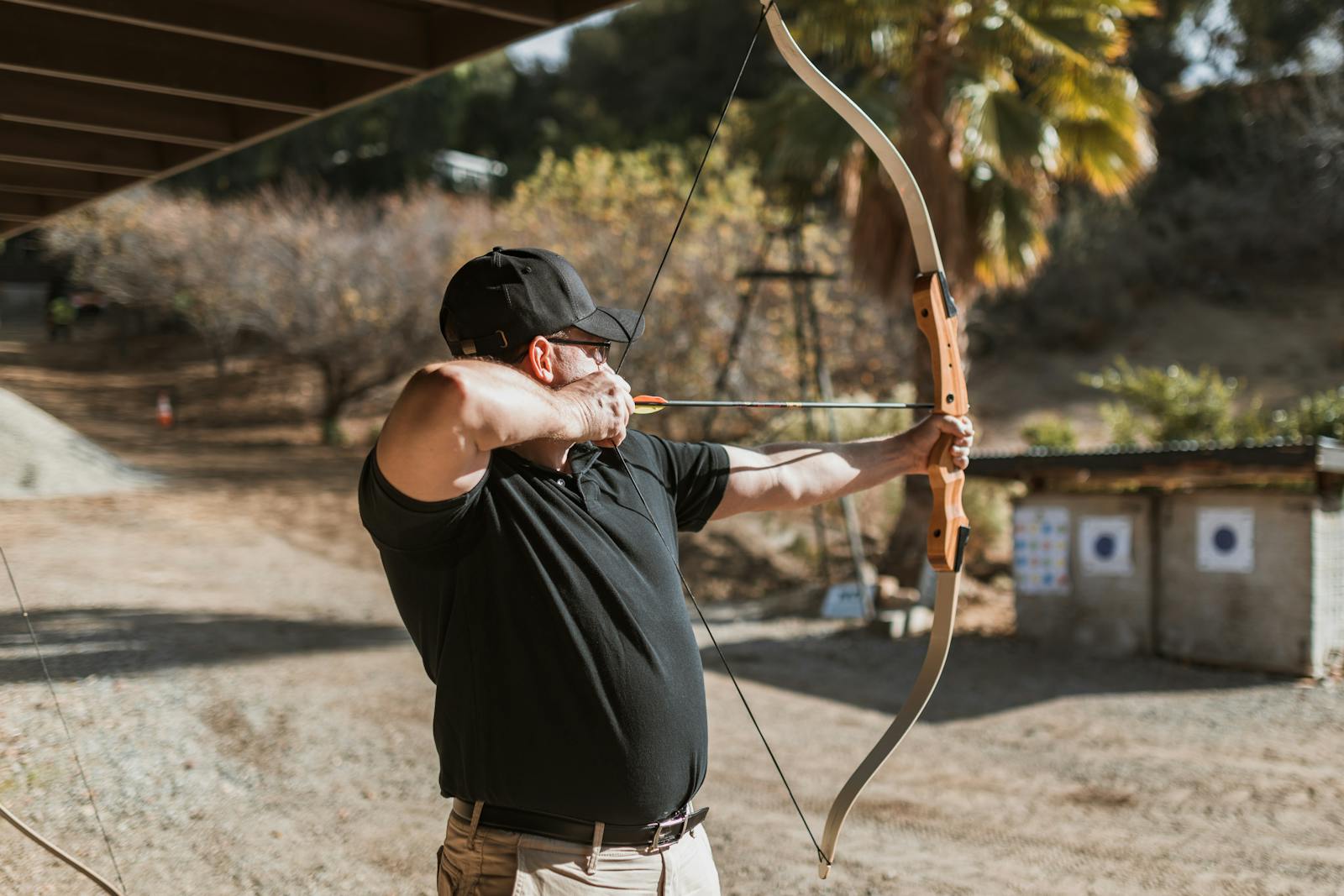
Stage 1, Cognitive: understanding the movement
In the first stage, the cognitive stage, you are still figuring out what to do: execution is unstable, errors are frequent and often large, and attention is entirely on conscious instruction. At the neural level, the prefrontal cortex and premotor areas are doing the heavy lifting, translating explicit instruction before passing it on to the motor areas that actually move the body.
The characteristics of this stage are consistent, starting with shot-to-shot variability, which is high: every arrow is different from the last. Cognitive load is at its peak: holding more than one or two cues in mind at the same time is genuinely difficult. Mental fatigue after 30 to 40 minutes is substantial, because attempting a new movement consumes far more energy than an automatic one. And errors, at this stage, are valuable: each one tells the system how to correct, and correction is faster here than at any other point.
The cognitive stage can last anywhere from a few sessions to several weeks, depending on how complex the movement is and what relevant experience you already have. For a small adjustment, shifting a finger position by a millimetre on the anchor, two or three sessions may be enough. For a structural change, such as rebuilding the entire mechanics of the release, four to eight weeks before exiting this stage is not unusual.
Stage 2, Associative: refining the movement
In the second stage you already know what to do and you are working on doing it well, so conscious attention shifts from general instruction to detail and errors decrease in both frequency and magnitude. Meanwhile stable associations begin to form between the elements of the movement: correct anchor, correct expansion, correct release, like a chain that holds itself together.
At the neural level, activity begins to migrate from the prefrontal cortex toward more specialised motor areas: the primary motor cortex, the cerebellum, the basal ganglia. Each repetition costs less energy, because the system, in essence, is building the specific muscle synergies that movement requires.
Three characteristics are typical here: variability declining, though it reappears under stress; attention that can be split between the primary movement and something secondary, such as monitoring breath while shooting; and frequent plateaus, periods where improvement seems to stall for days or weeks before a new step forward. These phases are discouraging, but they are part of the process: the system is consolidating before moving to the next level.
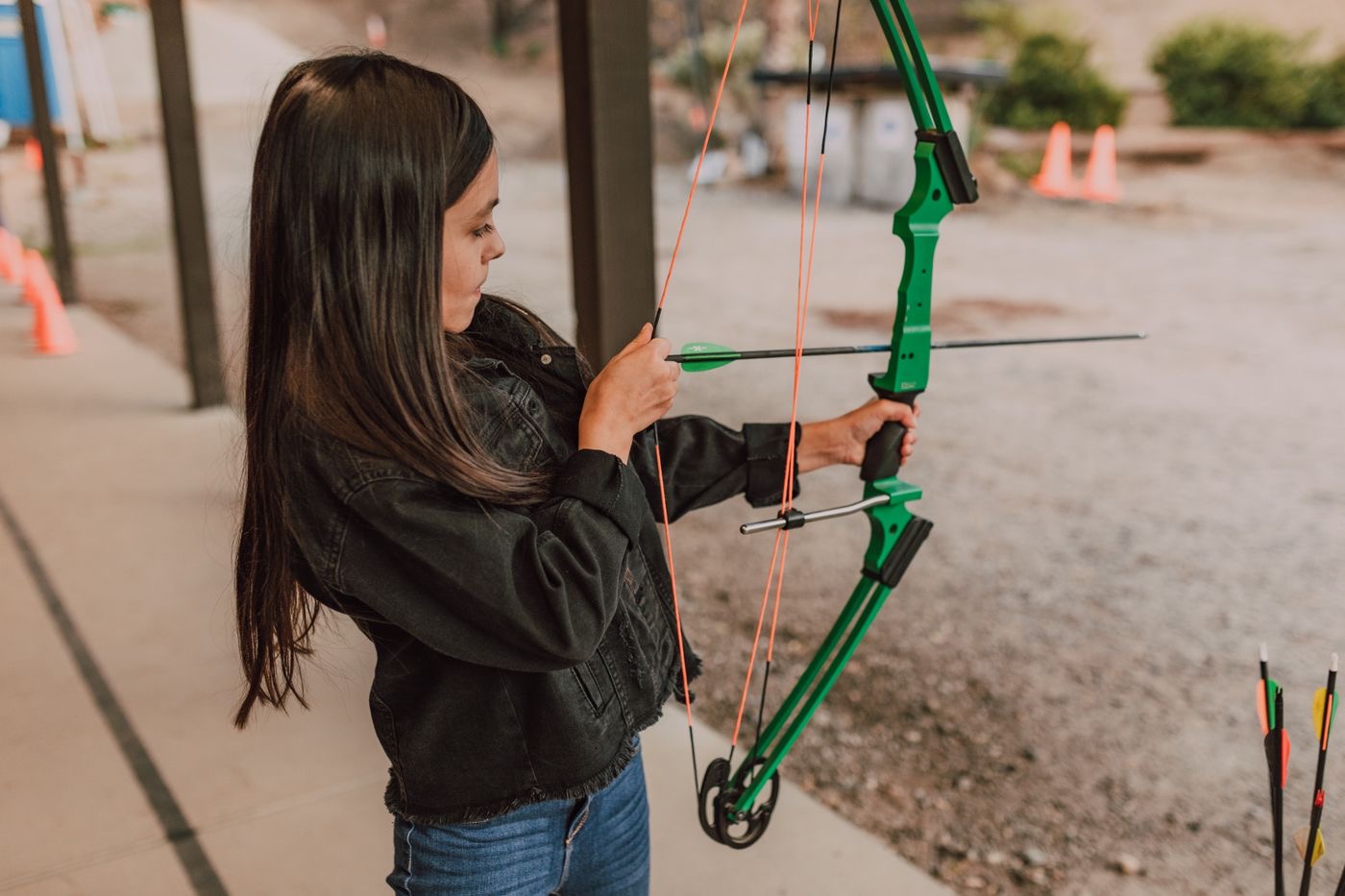
The duration of the associative stage is the least predictable: anywhere from a few weeks to several months. For technically complex movements in archery, a fluid and technically advanced release, for instance, three to six months in this stage before moving on is entirely normal.
Stage 3, Autonomous: automatizing the movement
In the third stage you execute the movement automatically, without thinking about it. The shot is stable, errors are rare and small, and conscious attention is free for other things: reading the wind, managing the mental side, thinking through competition strategy. At the neural level, the cerebellum, basal ganglia, and primary motor cortex are now in charge; the prefrontal cortex is largely quiet.
This is the stage every competitive archer is aiming for, but it is also the most treacherous, because once a pattern has consolidated the brain defends it vigorously. Changing an automatic movement is considerably harder than learning one from scratch, because the system must first uninstall the old pattern before it can install the new one.
At this point three characteristics define the stage: minimal variability under normal conditions; reasonable stability under pressure, though not unlimited; and a resistance to change that becomes a real problem when the automatized movement carries embedded flaws. This is precisely why correcting errors that have already consolidated requires specific protocols and considerable time.
How long it takes to reach full automaticity depends on movement complexity and the volume of deliberate practice invested. For complex movements in archery, a rough benchmark often cited in the literature is 10,000 quality repetitions as an order of magnitude. At 200 arrows per session, four sessions per week, that is around 800 arrows per week: 10,000 repetitions lands in the range of a few months, not a few weeks. It remains a rough order of magnitude, not a precise threshold.
How long the three stages last in archery
Exact timelines vary from archer to archer, depending on age, prior experience, and the quality of training. That said, for a movement of average complexity, some typical ranges for each stage are worth knowing.
These remain averages: archers coming from similar disciplines, such as target shooting, golf, or billiards, tend to move through the cognitive stage faster, whereas someone training once a week may find each stage takes two or three times as long as someone going to the range four or five times.
Four mistakes that slow down motor learning
Working with archers at every level, the same mistakes tend to reappear, and each of them slows the transition through the three stages, which is why they are worth naming one by one.
Volume without quality
Shooting thousands of arrows with distracted attention consolidates suboptimal patterns rather than correct ones. The system learns what it actually practices, not what you wish it were practising.
The practical rule: 60 arrows with full attention are worth more than 200 shot while distracted, because quality beats quantity across all three stages of motor learning.
Changing the movement too soon
Modifying one technical element before the previous modification has consolidated keeps the system perpetually in the cognitive stage, never reaching the autonomous one.
A practical guideline: introduce one technical change at a time and give it at least 4 to 6 weeks of consolidation before the next, since skipping steps slows the overall process.
Absence of feedback
Without external information about execution (video, a coach, objective data) the archer consolidates what feels correct, which does not always match what is actually correct.
Investing in external feedback, even something as simple as a smartphone video, accelerates all three stages. Internal perception is notoriously unreliable for archers still in the associative stage.
Neglecting overnight consolidation
Training seven days a week without structured rest prevents the brain from consolidating the learned pattern, a process that occurs primarily during sleep.
Rest is an active part of learning, not a break from it, and denying it means denying the neural consolidation of the progress already made.
The six principles of deliberate practice
Research on motor learning has identified a set of principles that, applied consistently, accelerate the transition between stages and improve the quality of final consolidation. There are six of them, and none is complicated in isolation; the difficulty lies in holding all of them together, session after session.
Motor learning in adults
Learning a motor movement is not something reserved for younger athletes: in adults the process follows the same three stages and reaches the same levels of automaticity, though in some cases it takes a little longer.
What changes with age is not the capacity to learn, but certain surrounding factors. Recovery after a session takes more time past the age of 50, and this has a knock-on effect on consolidation. The maximum volume that can be sustained decreases, meaning shorter but more frequent sessions become more effective. On the other hand, experience in other disciplines tends to accelerate learning, and adults generally have more of it than younger athletes.
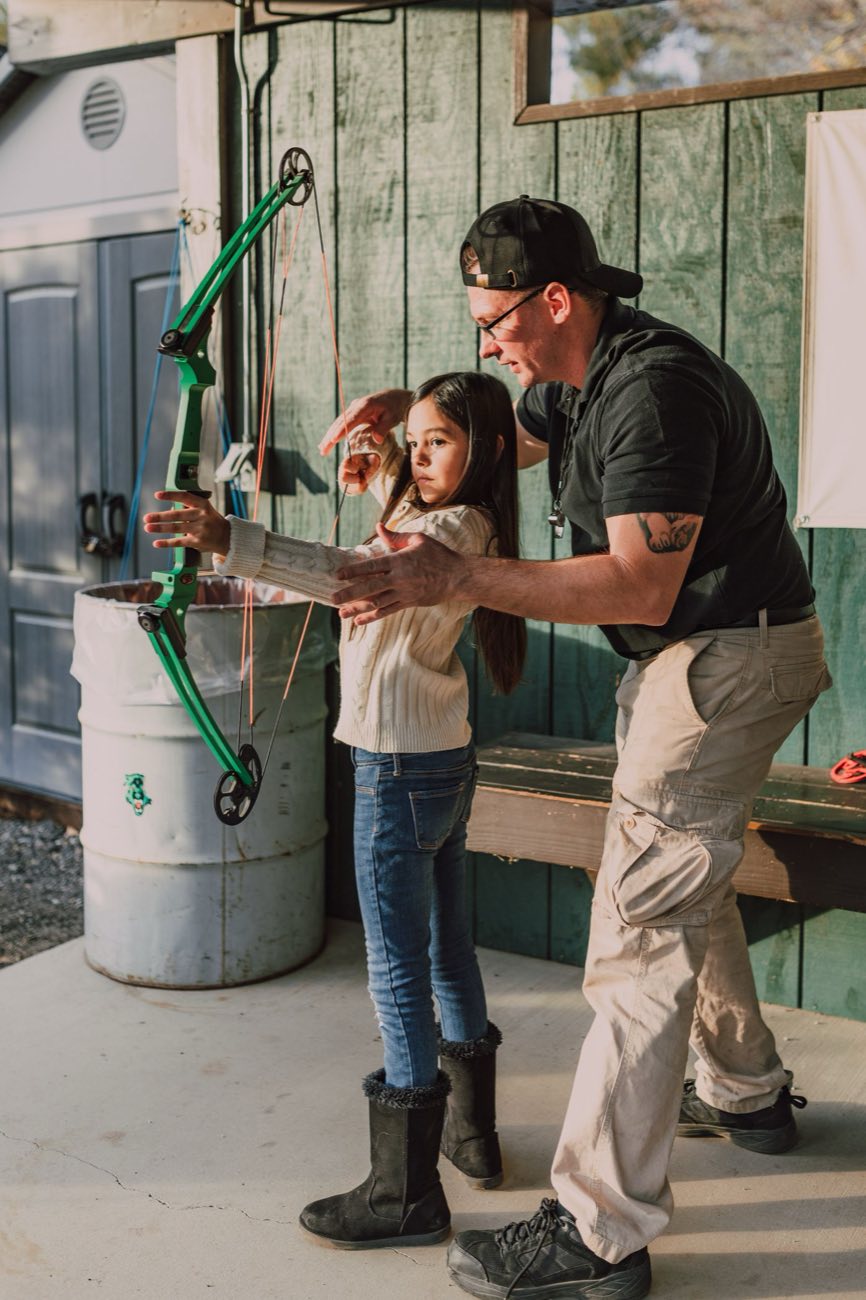
For the adult archer starting from scratch, or rebuilding a movement, the decisive quality becomes patience. The three stages may take one and a half to two times as long as they would for a twenty-year-old, but the endpoint, for those who respect the process, is the same.
Maintaining a movement over the medium term
A movement that has reached the autonomous stage is not yours forever. Without continued practice, the pattern degrades gradually, and the speed at which it does depends on how deeply it was built and how regularly it is maintained.
The practical rule, well documented in the literature, runs roughly as follows. One week off, after months of consolidation, costs very little: recovery takes one or two sessions. A month off leaves a visible decline, but one still recoverable in 2 to 4 weeks. Three months off requires genuine reconsolidation, up to 2 to 3 months to return to where you were. And beyond six months of complete inactivity, parts of the pattern are lost and need to be relearned almost from the beginning.
The practical implication is clear: even a few maintenance sessions during difficult periods, when work eats up your time, during holidays, or through minor injuries, do far more than stopping completely. A single 30 to 45 minute session per week during a demanding month preserves the movement far better than a full break.
Transfer between movements: what carries over and what does not
Learning one specific movement partly influences the learning of related ones, and understanding how these transfers work is what allows a training programme to exploit them instead of fighting them.
Positive transfer occurs when learning one movement makes it easier to learn another. For instance, an archer who has built a solid pre-shot routine in Olympic recurve will carry part of it into compound, even though the two releases have nothing in common. It is the cognitive structure of the routine that generalizes.
Negative transfer is the other side: a consolidated movement interferes with learning a different but similar one. An archer who has automatized a clicker release in recurve will tend to find learning a compound release harder, because the system will spontaneously trigger the old program.
In practical terms, it is worth deciding deliberately which movements to train together and which to keep separated in time. Movements that are similar but differ in critical ways, two types of release, for example, are often learned more effectively in separate periods rather than in parallel. The logic of the training calendar matters here as much as the quality of individual sessions.
One final principle deserves attention: learning is a deeply individual process. The timelines, the sticking points, the specific difficulties all vary considerably from archer to archer. Comparing yourself to your own progress from yesterday is useful; comparing yourself to someone else's is almost never worth it. Every nervous system learns at its own pace, and respecting that pace is the difference between steady growth and frustration that cycles back again and again.
Motor learning is a predictable neural process.
Knowing which of the three stages you are in changes how you should train. Large errors are normal in the cognitive stage, but a warning sign in the autonomous one. Plateaus are natural in the associative stage, but worth investigating in the autonomous one. The right diagnosis is the first step toward working with the process rather than against it.
Further reading. What you read here rests on the scientific literature. To keep the text readable I do not cite individual studies inline, but you will find the full reference list, over 120 studies and books, on the dedicated page.
Go to the bibliographySome things I take on directly.
I work on training and functional rehabilitation, on injury prevention and recovery, and on research. If you have a project or a collaboration in mind, or a question left over from what you have just read, write to me: I answer myself.