Part of the complete guide: How to improve your archery score
Postural stability studies find the centre of pressure is steadier in higher-level archers, and that steadiness correlates with score. In a still sport every micro-oscillation at the base reaches the arrow tip amplified by distance. Unstable-surface work, Pilates and anti-movement core exercises all show effects, though on small preliminary samples: one Pilates study improved dynamic balance but not static balance, which matters because archery is predominantly static. Two or three sessions of 15 to 20 minutes a week are enough.
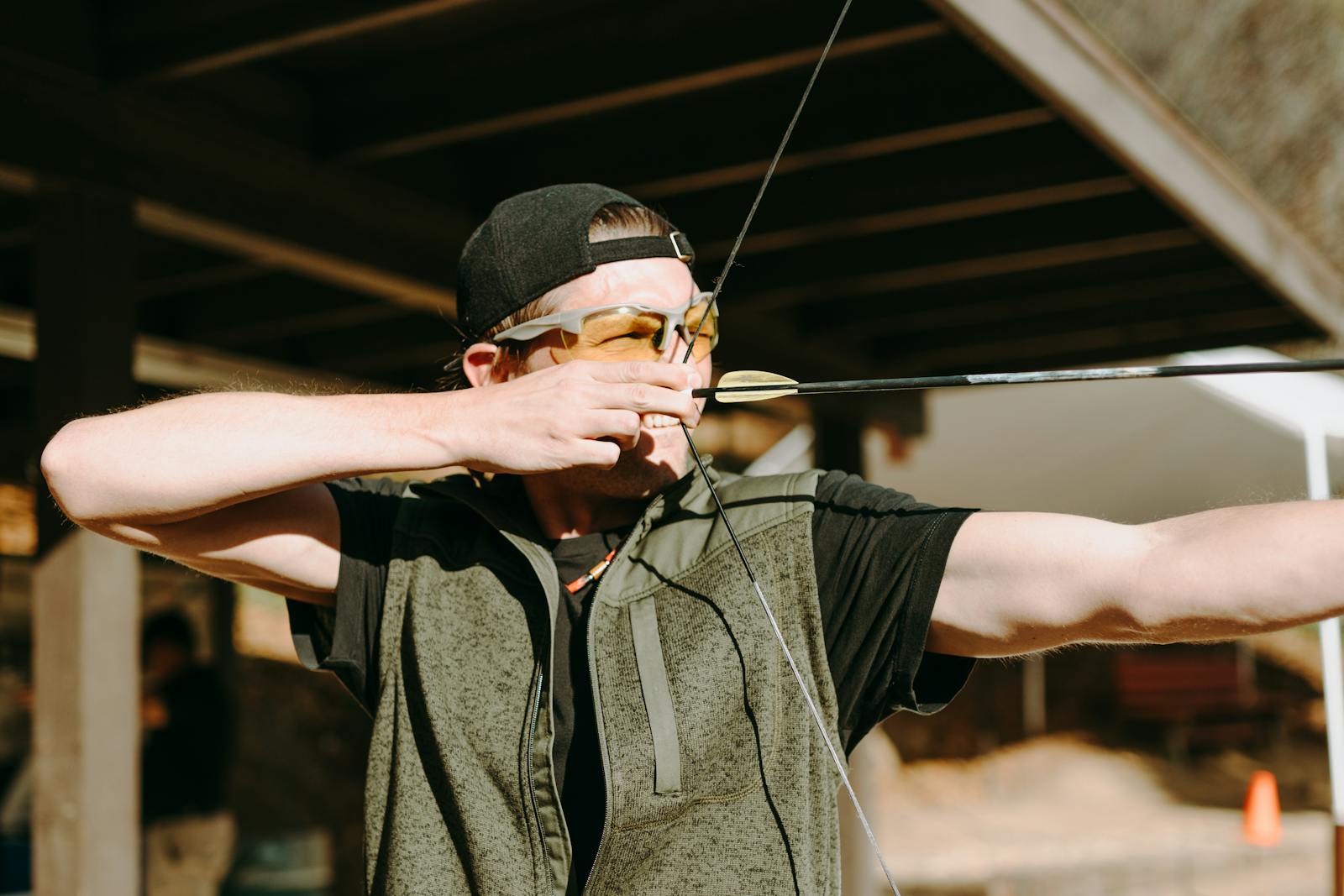
There is a paradox in archery: it is a sport where you do not move, and for that very reason balance seems irrelevant, whereas exactly the opposite holds. When the body is "still", every micro-oscillation at the base travels directly to the tip of the arrow, amplified by distance. There is no movement to mask it: stability is all you have.
Studies on postural stability in archers confirm this: the centre of pressure, the point around which the body oscillates, is more stable in higher-level athletes, and that stability correlates with score. This is not something only fussy coaches worry about: it is one of the foundations the entire shooting action rests on.
The practical point is that balance, core and proprioception can be trained, and the research on protocols such as Bosu, Pilates and core training shows measurable effects on stability, with encouraging signals for accuracy too. This article looks at why they matter, what the studies say, and how to incorporate them without turning into a gym athlete.
Why balance matters in a "still" sport
Standing still is never truly standing still: the body continuously corrects tiny losses of balance, and those corrections are postural sway. The more efficient the system, the smaller and quieter those corrections stay, whereas in a less efficient one the platform holding the bow starts to rock, and a rocking platform makes a steady aim impossible.
Training balance, then, is not about learning to stand on one leg for show: it is about making postural control more efficient, so the body "spends" less to stay upright and has more resources available for precise execution. The effect is not visible on the target in any direct way, but it is felt in the steadiness of the aim.
Core: the hinge between lower and upper body
The core, the deep band of trunk muscles, is the hinge connecting the base (feet, legs) to the upper body where the shooting action takes place (shoulders, arms). When the core does not hold, the tension from the draw arm loads the lumbar spine instead of being stabilised, and trunk alignment deteriorates across a session.
A stable core does two things: it keeps the trunk solid as a single unit while the arms work, and it protects the back from overload. A sculpted abdomen is not the goal; what matters is a core that can resist: rotation, extension, collapse under fatigue. That is a different quality from the one trained with conventional abdominal exercises.
Proprioception: sensing without looking
Proprioception is the sense that tells you where your joints are without looking at them. It is what allows you to find the same setup, the same anchor, the same scapular position, arrow after arrow, without visual confirmation. In a sport built on repetition, this is invaluable: the finer the proprioception, the more repeatable the shot.
The good news is that proprioception improves with specific stimuli: work on unstable surfaces, eyes-closed exercises, slow and deliberate movement control. These are the same stimuli that develop balance, which is why the two areas of training often overlap.
What the research says: Bosu, Pilates, planks
Several studies have tested balance and core protocols with archers, and clear pointers emerge about what works.
How to integrate this into training
Nothing needs to be overhauled: two or three short sessions a week, 15 to 20 minutes each, are enough to produce a measurable effect over a few months. The mistake to avoid is the opposite one: turning balance work into a parade of showy exercises on unstable surfaces. The goal is not difficulty, it is transfer to the shot.
The guiding principle is progression: start with stable surfaces and slow control, and add instability only once control is solid. Keep the work tied to shooting, with exercises that replicate the archer's position, scapular control and trunk stability, rather than chasing performance as an end in itself. Integration, not intensity, is what makes the difference.
A steady aim begins with a steady base.
Balance, core and proprioception are the invisible infrastructure of the shot: they do not show up on the target directly, but without them no refined technique holds. A few minutes of focused work, two or three times a week, is worth more than hours of showy exercises disconnected from the action.
Further reading. What you read here rests on the scientific literature. To keep the text readable I do not cite individual studies inline, but you will find the full reference list, over 120 studies and books, on the dedicated page.
Go to the bibliographySome things I take on directly.
I work on training and functional rehabilitation, on injury prevention and recovery, and on research. If you have a project or a collaboration in mind, or a question left over from what you have just read, write to me: I answer myself.