Part of the complete guide: How to improve your archery score
RMSSD read at rest in the morning only means something against your own 7 to 14 day baseline, never against another archer's. Anticipatory cardiac slowing is the striking finding: 3 to 5 seconds before release, experienced archers drop 10 to 20 beats per minute, beginners speed up. Slow breathing at 4 to 6 cycles a minute engages the vagus in 60 to 90 seconds. One low reading means little; three days of decline does.
For most of the twentieth century, the belief was that a healthy heart was a regular heart. Then cardiology established the opposite: a heart that is too regular is a heart under strain. A healthy heart changes rhythm continuously, responding to an invisible and uninterrupted conversation between the two branches of the autonomic nervous system, the sympathetic, which acts as the accelerator, and the parasympathetic, which acts as the brake.
This beat-to-beat variation is measurable, and it is what we call heart rate variability, or HRV. In precision sports it has become the most studied indicator of physiological readiness and arousal regulation. In archery, where the difference between a ten and an eight comes down to millimetres and milliseconds, reading the state of the nervous system before drawing is now a practical tool, not a textbook exercise.
In this article we look at what HRV actually measures, the curious cardiac slowing observed in elite archers just before the release, the optimal arousal window, how to incorporate monitoring into a training week, and, without skirting the issue, what its limitations are. The aim is to give you a framework for using it methodically, not a number to trust as though it were an oracle.
What HRV actually measures
If the heart beats 60 times per minute, that does not mean exactly one second passes between each beat. The real interval fluctuates: 980 milliseconds, then 1020, then 1005, then 992. It is the way these small oscillations are distributed that tells us how flexible the nervous system is, how quickly it can move from activation to calm and back again, adjusting the heartbeat to whatever the moment demands.
To assign a number to HRV, the literature uses parameters grouped into three families.
For archery the parameter that matters most is RMSSD. It is also the one used by almost every app, and it is primarily sensitive to the parasympathetic branch, the one that governs calm, recovery, and fine regulation. When sports practitioners refer to HRV, unless otherwise specified, they almost always mean RMSSD measured in the morning, at rest, seated or lying down, for 2 to 5 minutes.
High resting HRV generally goes hand in hand with good recovery, low perceived stress, and quality sleep. Persistently low HRV, on the other hand, reflects accumulated fatigue, chronic stress, or inflammation. For an athlete, measuring it at wake-up for several weeks builds a personal baseline, and any significant deviation from that baseline is a signal worth reading, not a verdict.
There is one point that is almost always misunderstood: HRV cannot be compared between different individuals. Two athletes at the same performance level may have baseline RMSSD values of 40 and 95 milliseconds respectively and both be in excellent shape. The absolute value depends on genetics, age, training history, and the individual characteristics of each person's nervous system. The only thing that matters is how far you deviate from your own mean, calculated over sensible windows of 7 to 14 days. The archer on the next lane is irrelevant.
The pre-release cardiac slowing
One of the most robust phenomena observed in elite archers is anticipatory cardiac slowing: in the 3 to 5 seconds before the release, heart rate drops by a measurable amount, sometimes 10 to 20 beats per minute below where it was a moment earlier, then rises again after the shot. In intermediate archers this decrease is smaller or absent altogether; in beginners, it often works the opposite way: the heart accelerates at the moment of aiming.
The explanations proposed for this converge on three mechanisms acting together.
Cardiac cycle synchronisation
Releasing consistently at the same phase of the cardiac cycle, when the pulse transmitted to the bow arm is most stable, reduces the mechanical noise from the heartbeat. Even micro-vibrations on the order of tenths of a millimetre can affect scoring at 70 metres.
ECG studies on archery have measured that experienced archers tend to release consistently at a specific point in their cardiac cycle, whether that falls in systole or diastole: the point varies between individuals, but it is the consistency that makes the difference, not the specific phase itself.
Parasympathetic activation
The calm, focused state of the experienced archer is expressed physiologically as vagal dominance: the vagus nerve slows the heart and reduces overall arousal.
This modulation requires years of practice and becomes, in effect, a physiological marker of the athlete's technical and mental maturity. It cannot be taught directly: it is built through quality repetition.
Attentional pre-activation
Cardiac slowing is correlated with lengthening of the quiet eye period and with increased frontal theta cortical activity. These are not three independent phenomena: they are expressions of the same cognitive transition.
The brain enters a state of concentrated attention with low internal interference; the heart, as part of the same system, reflects this modulation by slowing.
This slowing is not a technique that can be learned on command: it arises on its own, through experience. In fact, trying to control it deliberately is almost always counterproductive, because the autonomic nervous system responds poorly to direct orders. What works is creating the conditions for it to appear naturally: steady breathing, a stable pre-shot routine, attention directed outward toward the target rather than inward toward one's own thoughts.
An experienced archer's heart pauses. A beginner's races.
An elevated and stable heart rate before the release is one of the simplest markers of sympathetic overactivation, what we call competition anxiety. Learning to breathe and slow down before release is also learning to indirectly influence the autonomic system. The direct route is slow diaphragmatic breathing: 4 to 6 cycles per minute activate the vagus in a measurable way within 60 to 90 seconds.
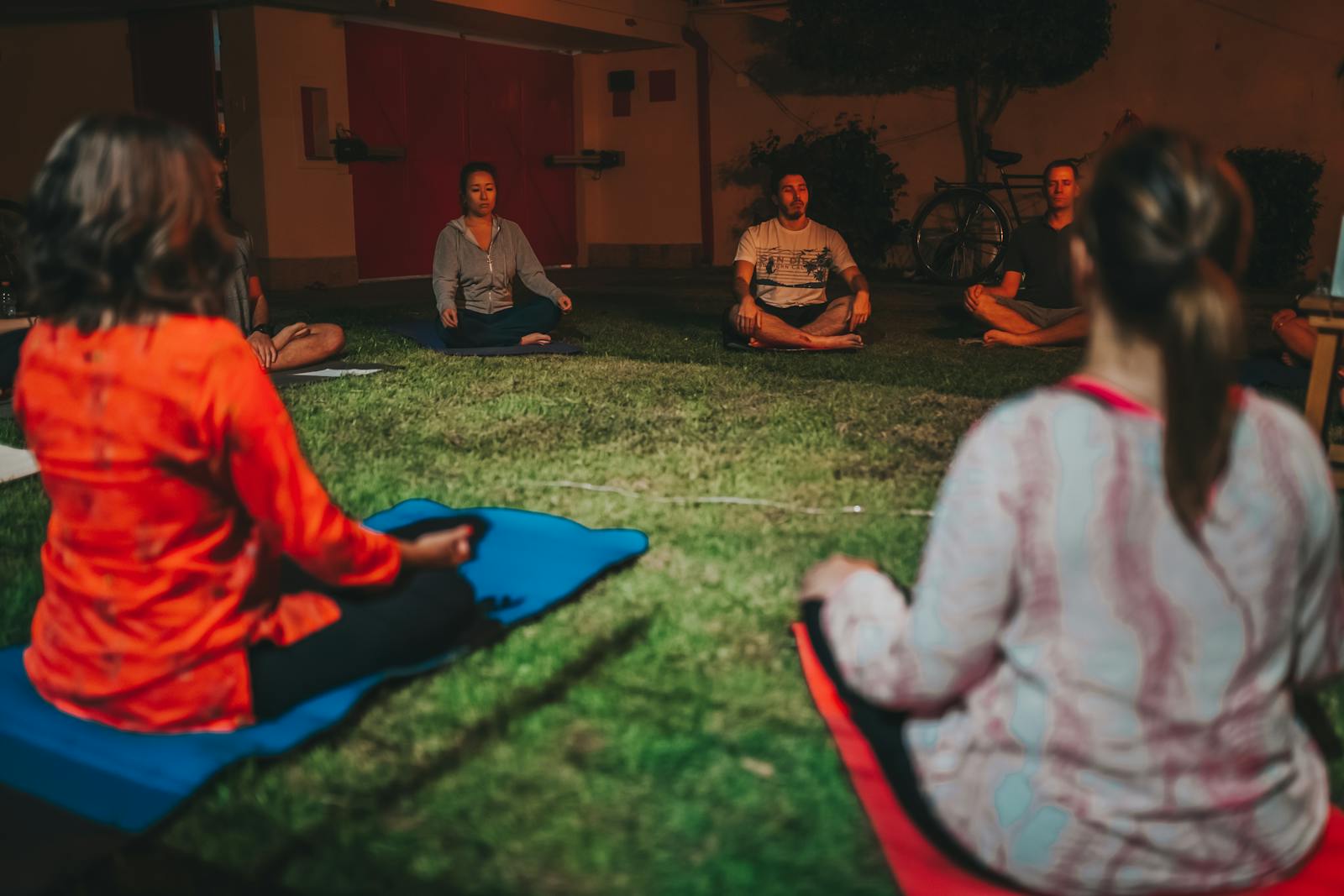
The optimal arousal window
There is a well-established idea in sport psychophysiology: every discipline has its own optimal activation window. Below that window you are sluggish, attention fades, and performance drops from underactivation. Above it, you are over-aroused: tremor increases, the aim becomes unstable, and performance drops from excess. The difference between the two states is often everything.
Every sport has its own window: weightlifting thrives on high activation, archery calls for medium-to-low activation. HRV read in real time helps clarify where in the window you currently are, and how to return to it if you have drifted out.
| State | HRV (RMSSD) | Resting HR | Effect on shot |
|---|---|---|---|
| Under-activated | High | Low | Attention lapses, concentration errors |
| Optimal | Medium-high | Medium | Alert calm, high repeatability |
| Over-activated | Low | High | Tremor, unstable aim, degraded decision-making |
| Chronic stress | Chronically low | Variable | Plateaux, recurring injuries, loss of motivation |
How to use HRV in practice
The theory is compelling, but HRV only delivers real value when it genuinely enters the weekly training cycle. For a competitive archer, in practice, it comes down to four ways of using it.
The real step forward lies not in a single data point but in combining HRV with other markers: RPE scales from sessions, hours of sleep, perceived stress scores, and objective performance in simulated rounds. An isolated low HRV reading is difficult to interpret on its own; a low HRV that coincides with high RPE from the previous evening, short sleep, and perceived tension is a signal converging from multiple directions and deserves attention.
When HRV monitoring is worth it
Despite all the enthusiasm surrounding the topic, HRV monitoring is not equally useful for every archer. Some will extract genuine value from it; others risk only adding number anxiety to a movement that should remain fluid. Three criteria help clarify which group you belong to.
Developing competitive archer
Training regularly (at least 3 to 4 sessions per week), competing monthly or more frequently, and trying to move through an intermediate plateau toward the next level.
For this profile, HRV has high value, because the ability to detect overload before it becomes visible in scores justifies the time and discipline that monitoring requires.
Recreational archer
Shooting once or twice a week for enjoyment, with no pressing competitive goals and no frustrating plateaux. Volume and intensity are well below overload thresholds.
For this profile, HRV has limited value, given that the risk is introducing a metric that generates anxiety without providing actionable information: better to invest energy in technical quality and enjoyment.
Elite archer at high training load
Weekly volumes above 400 arrows, daily training with integrated strength and technique sessions and a packed competitive season make the risk of overload real and costly.
For this profile, HRV is a baseline tool and not an optional extra, because planning loads without autonomic data is blind and at high intensity the mistakes show up as injuries or form decline.
Which tools to choose
The HRV device market has expanded rapidly over the past five years, and the options fall into three precision tiers, each with a typical intended user.
The chest strap with electrodes (Polar H10, Garmin HRM-Pro) remains the reference standard, because it reads the ECG signal directly, with accuracy close to clinical instruments, and connects via Bluetooth to dedicated apps (HRV4Training, Elite HRV, Kubios). It costs around 80 to 100 euros and lasts 3 to 5 years. If you want data you can trust, this is the choice.
Smart rings (Oura, Ultrahuman) use photoplethysmography during sleep. They are less precise than ECG on a single beat, but measuring for hours rather than minutes recovers some of the error. They cost between 250 and 400 euros plus a subscription: convenient for those who prefer not to think about it in the morning, but more expensive over the long term.
General-purpose smartwatches (Apple Watch, Garmin, Fitbit) include HRV as a secondary function, with precision that varies considerably from model to model. If you already own one, it is worth activating the monitoring and observing how it behaves; but for serious use it is worth pairing it with a dedicated device.
The honest limitations of the tool
For the sake of honesty, the limitations of HRV also need to be stated, because no measure is perfect and awareness of those limitations is precisely what distinguishes someone who uses the tool from someone who becomes dependent on it.
High individual variability
Some athletes respond to training loads with very high HRV, others with low HRV, which means group averages conceal highly heterogeneous patterns.
Practical consequence: ignore the average values published in apps and always build your own personal reference.
Sensitivity to external factors
Sleep, alcohol, hydration, menstrual cycle, ambient temperature, and jet lag all influence HRV independently of training.
A drop in HRV does not automatically mean overload, because it should always be interpreted in the context of other life variables.
Devices are not equivalent
An Apple Watch and a Polar chest strap produce similar but not identical data, so changing device mid-protocol invalidates baseline continuity.
The pragmatic rule is to choose one device and keep it for at least a full season before evaluating alternatives.
It is not an oracle
HRV is an indicator and not a certainty, so it should be integrated with other observations: subjective perception, objective performance, sleep quality.
The typical mistake is cancelling a training session based on a single low value, whereas a week of trend data counts for more than one isolated reading.
None of this diminishes the value of the tool: it simply means it should be used thoughtfully. As with any metric, the typical error is taking it too seriously in the short term and not seriously enough in the medium term. The strength of HRV lies in trends over 7 to 14 days, not in this morning's value. A single low day means nothing in isolation; three consecutive days of decline, on the other hand, is a clear message that the system is asking for attention.
There is also a psychological risk that is consistently underestimated: dependence on the number. Some athletes reach the point where they cannot train unless the morning reading is what they expected, and end up listening to a screen instead of their own body. When that happens, the fault lies not with the tool but with how it is being used. HRV is meant to sharpen the ability to read one's own state, not to replace it.
Further reading. What you read here rests on the scientific literature. To keep the text readable I do not cite individual studies inline, but you will find the full reference list, over 120 studies and books, on the dedicated page.
Go to the bibliographySome things I take on directly.
I work on training and functional rehabilitation, on injury prevention and recovery, and on research. If you have a project or a collaboration in mind, or a question left over from what you have just read, write to me: I answer myself.