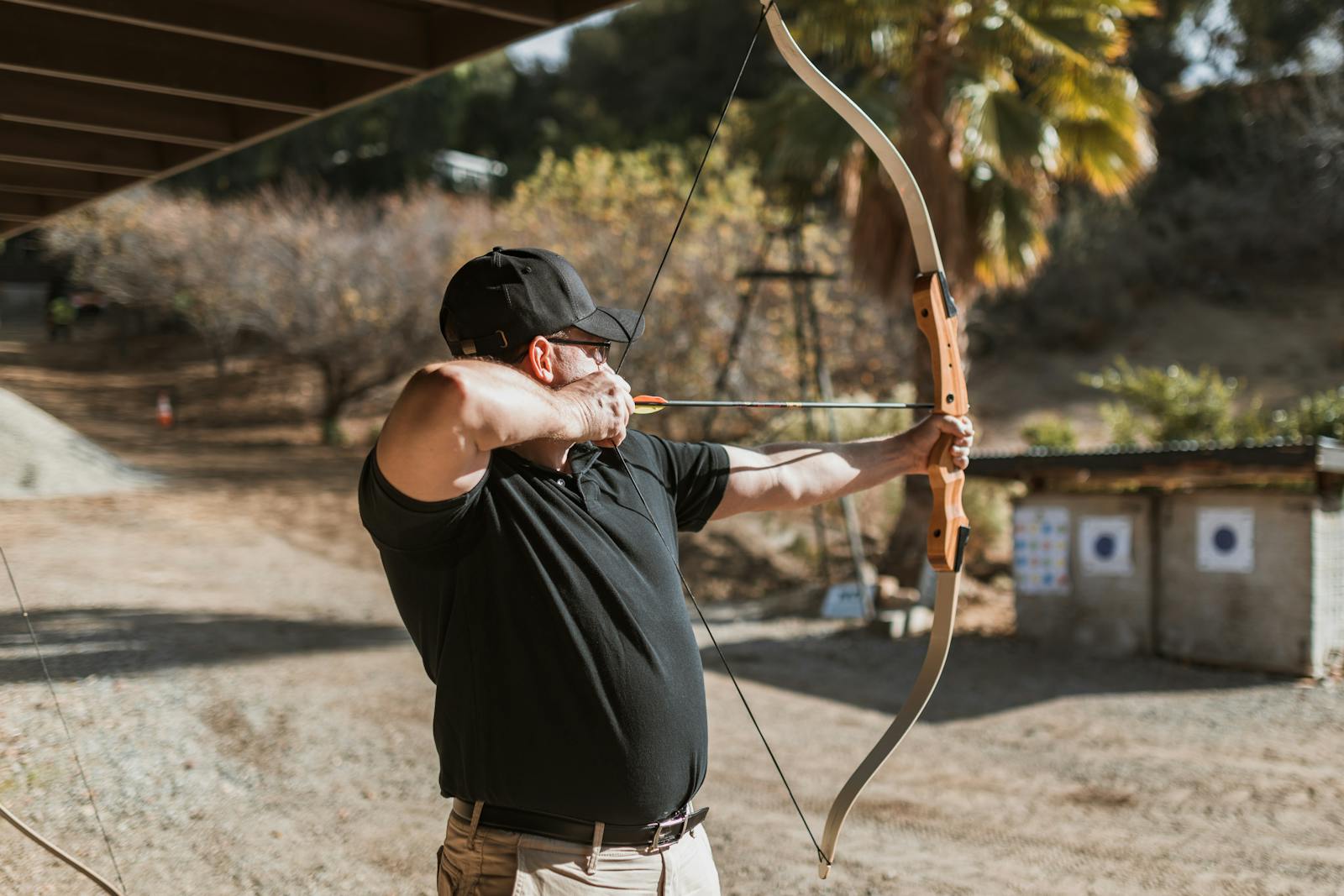
Part of the complete guide: How to improve your archery score
The two most damaging beginner mistakes are behavioural, not technical: too much volume too soon, which consolidates poor patterns, and comparing yourself with archers who have ten years behind them. The technical ones cluster around posture, anchor on three fixed reference points, and a release where the fingers disengage passively instead of being pushed open. Keep the aim inside 6 to 8 seconds and start at 20 to 26 pounds, so full draw is reached comfortably. Four to six structured lessons early on are worth more than expensive kit.
Archery has a particular quality: a movement repeated many times tends to become automatic, and a flaw picked up early settles in as an automatic pattern that later has to be rewritten, which takes time and patience (I covered motor learning separately in another article). It is not that nothing can change after the first few months, it certainly can, but getting the fundamentals right from the start remains the easiest investment, because it pays back far more than any correction made afterward.
In this article I go through the ten mistakes I see coming up again and again in people just starting out. For each one I explain how to recognise it, why it causes damage over time, and how to avoid it from the beginning. The goal is not to discourage anyone new to the sport, since archery is a welcoming and rewarding discipline, but to give you a useful map for building a solid practice.
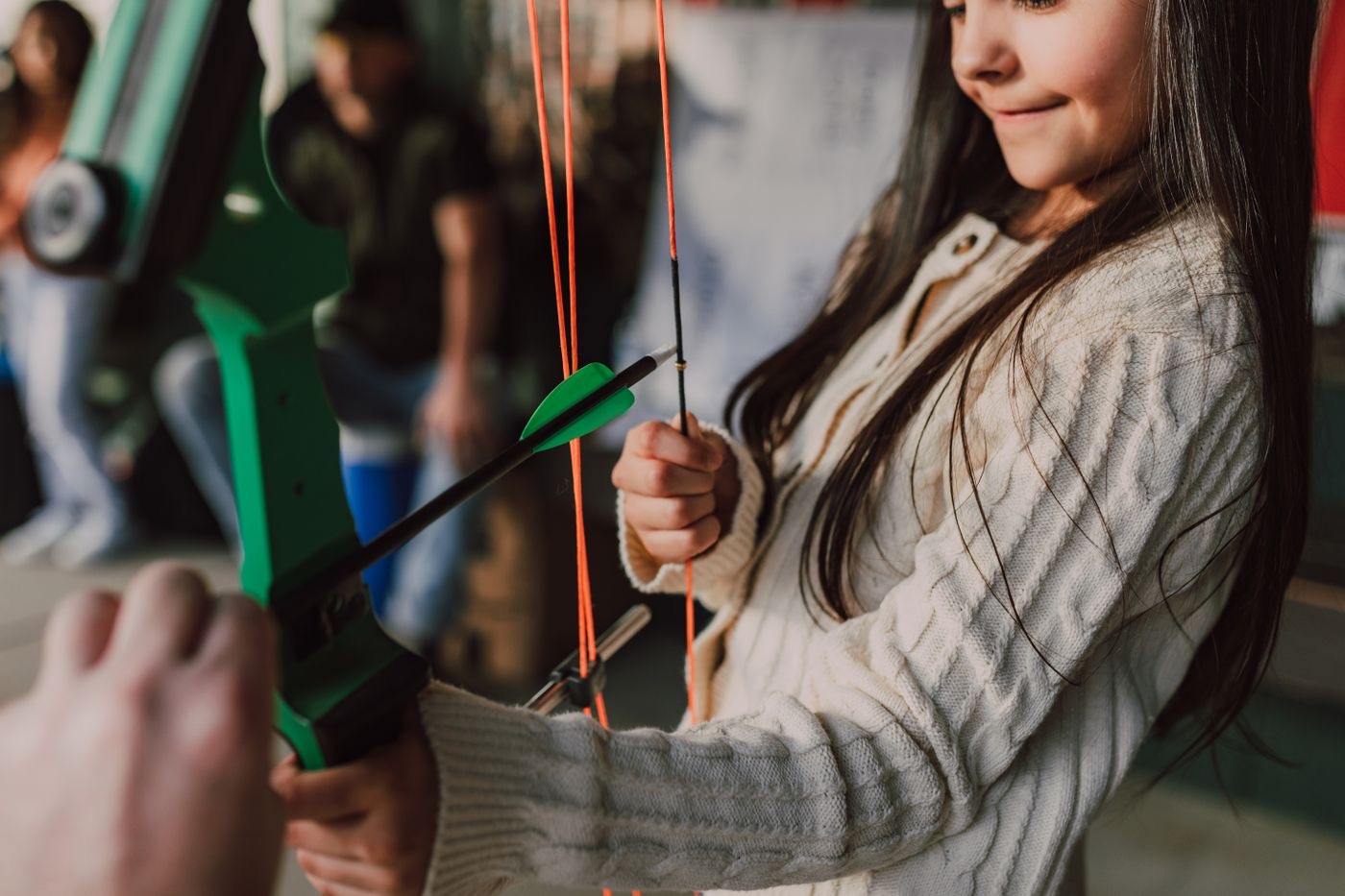
Posture errors
Poor foot position
Stance too wide, too narrow, or misaligned relative to the target. Result: unstable base, inadequate torso rotation, compensations that ripple through the entire shot.
Fix: feet shoulder-width apart, aligned parallel to the shooting line (or slightly open in an open stance), weight distributed 50-50. Have an instructor check this during the first few weeks.
Raised shoulders during the draw
Elevation of the upper trapezius during the draw, shoulders creeping toward the ears. Result: neck pain over time, incorrect scapular activation, tension that prevents a clean release.
Fix: draw with the active sensation of pressing the shoulders down, engaging the lower trapezius and serratus anterior. Scapular stabilisation exercises in the gym help reinforce this.
Anchor errors
Inconsistent anchor
The under-chin contact point shifts a few millimetres from arrow to arrow. Result: vertical spread in the group, no reliable baseline for sight adjustment.
Fix: three fixed reference points (finger under chin, string to nose, string to lip), consistent pressure checked on video. Blank bale work to consolidate the anchor position.
Incomplete draw
The beginner releases before reaching full draw, out of apprehension or inexperience. Result: lower arrow speed, dirty release, inconsistent groups.
Fix: in the first months, use a very low draw weight (24-28 lb) that allows full draw to be reached comfortably. Increase gradually only once full draw is consistently achieved.
Release errors
Plucking the string
The draw hand pulls away from the face, jumping forward or downward. Result: the arrow leaves crooked, accuracy drops, the motion feels like a jerk rather than a release.
Fix: deliberate work on follow-through, keeping the draw hand in its expanded position behind the ear after the shot. Hold drills without releasing help build the correct feel.
Actively opening the fingers
The beginner actively pushes the fingers open instead of letting them disengage passively. Result: the arrow torques, the release is dirty, groups spread laterally.
Fix: learn the passive release (extensors on, flexors off). Short-distance drills focused on relaxing the string hand.
Aiming errors
Holding the aim too long
The beginner holds the aim for too long (beyond 8-10 seconds), the bow arm fatigues, tremor increases and the release becomes forced. Result: enormous technical variability and frustration.
Fix: a pre-shot routine of 6-8 seconds maximum. If the aim is not ready within that window, lower the bow and start again. Never force a release on a degraded sight picture.
Internal focus instead of external
The beginner concentrates on how the bow arm is moving, on how the draw feels, on internal sensations. Result: technical rigidity, performance below potential, frequent plateaus.
Fix: external focus on the target (the gold, the centre) while aiming. Motor learning research generally shows an advantage for external over internal focus, particularly in the early stages of learning, though the picture is more nuanced in certain contexts and at higher skill levels.
Mental and approach errors
Too much volume too soon
Pushing volume too high in the first months, convinced that shooting a lot speeds up learning. Result: consolidation of suboptimal patterns, and fatigue that builds up and degrades technique, with load falling on the fingers, forearm and shoulder.
Fix: in the first months, keep sessions short and look after the quality of every shot, raising volume only a little at a time. Training guidance tends to set a cap on arrows per session for this reason. Quality of attention on each arrow matters more than volume.
Comparing yourself to experienced archers
The beginner measures their scores and technique against archers with ten years of experience, becomes discouraged, quits, or pushes their own development well beyond their current level.
Fix: compare yourself only to your past self. Tracking your own scores month by month reveals real progress that comparison with others obscures.
What to do in the first year
For anyone just starting, the first year shapes most of what follows, because certain choices made during those twelve months compound in ways that become very significant over time.
The instructor: not an optional investment
A good instructor early on is worth a lot. Starting on your own, relying on videos and the occasional book, is possible, and learning by observation has its value too, but it is easier to let errors take root without noticing: the biomechanics of the shot are complex enough that flaws picked up on your own get consolidated before you even notice you have them.
A good qualified instructor (FITARCO certified or equivalent), in the first 6-12 months, is worth considerably more than it costs. Regular lessons, once a week or once a fortnight, catch and correct mistakes before they become automatic, and they shorten the learning curve substantially.
And if budget is tight, even just 4 to 6 well-structured initial lessons leave a lasting benefit. Better to concentrate the investment at the start than to spend the same amount later trying to correct mistakes that could have been avoided.
Starting equipment: what you actually need
A typical beginner mistake is jumping too quickly into expensive equipment. In the first 6-12 months a well-chosen basic setup is more than enough, and you will change it anyway once your technique has developed.
For a beginner recurve archer, a solid starting setup looks like this: entry-level aluminium riser (150-300 euros), basic limbs (80-150 euros), standard string, aluminium or composite arrows (50-80 euros per dozen), basic sight, bow sling, chest guard. All in, 400-700 euros new, considerably less if you find good used gear.
For a beginner compound archer the list runs like this: entry-level bow with adjustable cams (400-700 euros), basic multi-pin sight, basic scope, entry-level carbon arrows, basic release aid. The initial investment is 700-1,200 euros: compound has a higher entry barrier, but the learning curve tends to be faster.
Waiting at least 12 months before moving to advanced equipment gives you a much clearer sense of what you actually want, and lets you choose based on your own experience rather than on the advice of whoever is selling.
The first 6-12 months are the most important.
Mistakes made in this phase get embedded as automatic patterns that can take months or years to correct. Trusting a qualified instructor, accepting the right fundamentals even when progress feels slow, resisting shortcuts: these are the choices that determine, to a large extent, the technical ceiling you will be able to reach in the years ahead.
Keeping motivation alive
Archery is learned slowly: progress is visible in the first few weeks, then it slows down and the plateaus arrive, the frustrating kind. Getting through those plateaus is a classic challenge in archery, and many beginners struggle with it.
Three things help in the first year. The first is personal measurement: keeping track of your own scores and a few technical metrics, month by month, reveals progress that week-to-week observation tends to miss. The second is organised variety, which means alternating distances, technique drills, early social occasions at the club, a first amateur competition. And the third is community: becoming part of your club's group of archers creates a social context that supports you even through the harder patches.
Archery offers deep rewards that go beyond the score: the near-meditative calm of shooting, sustained concentration, a connection to very old traditions, the social dimension of the club. Learning to appreciate these from the start makes the journey richer and motivation more durable.
What I wish I had known ten years ago
I will close with a distillation of advice that experienced archers often share with beginners, drawn from thousands of hours on the range: points that, applied from the start, genuinely shorten the path.
First: patience matters more than talent, because those who expect fast progress either burn out or give up, whereas those who accept a path measured in months and years build foundations that stay with them for life.
Second: quality beats quantity, at every level. Thirty arrows shot with full attention are worth more than two hundred shot while distracted, and the principle holds universally, at every stage of your career as an archer.
Third: sleep and recovery count as much as training. Many beginners overlook this, convinced that everything comes down to volume, whereas the research says otherwise: without adequate recovery, every hour of training returns less than half of what it could.
Fourth: find a mentor or experienced coach, even if only for occasional consultations. In the early years the value of qualified external feedback is considerable: it does not replace personal practice, but it makes that practice far more effective.
Fifth, enjoy the process: archery rewards those who build a deep relationship with the practice itself, beyond results, and cultivating that relationship from the beginning is the foundation of a long and fulfilling career.
These five principles, lived through in the early years, make the difference between the archer who stays a frustrated amateur and the one who builds a lasting, productive relationship with the sport. They are not recipes for immediate competitive success: they are the foundations on which any future success can be built.
How to progress beyond the first year
After a first year with solid foundations, the road depends on what you want. Some choose the competitive path through FITARCO, with its regional and national competition calendar, while others prefer a rewarding amateur practice free from competitive pressure. Both are valid choices that lead to different but equally rich experiences.
For those aiming at competition, the second and third years are generally about building solid technical volume, competing at provincial and regional level, and developing the first real ability to manage the mental side in competition. The fourth and fifth years open up national levels for those showing steady growth, with more structured physical and mental preparation and, where appropriate, some discipline specialisation.
For those choosing the amateur route, the second and third years are a time to explore different ways of shooting: recreational target, some 3D, social events at the club, friendly competitions without the pressure of standings. This variety keeps motivation alive without the competitive intensity that does not suit everyone.
In either case, staying in contact with a qualified instructor, even monthly or quarterly sessions after the first year, ensures that technique continues to develop and that any emerging flaws are caught before they take root. It is a modest investment with a significant return over the long term.
Archery is one of those rare disciplines that can remain rich and stimulating for decades. The beginner today who builds solid foundations can look forward to 30-50 years of rewarding practice. It is worth investing at the start, to build foundations that hold over such a long distance.
Correcting already-established errors
What if you are an intermediate archer and you recognise yourself in one or more of these mistakes? The good news: they can be corrected, even after years of consolidation. The not-so-good news: it takes patience, and you have to accept that during the rebuilding phase your score will, for a while, go down.
The correction process generally has three phases, and the first is precisely identifying the error, with slow-motion video and, ideally, feedback from an experienced coach. Internal sensation often misleads at this stage; objective external evidence is what you need.
The second is unlearning the old pattern, through specific low-volume drills: blank bale, short distances, large targets. This phase typically takes 4-8 weeks, during which scores under normal conditions are almost always lower than before.
The third is consolidating the new pattern, with increasing volume and progressively more demanding conditions. This phase lasts 8-16 weeks, and marks a gradual return to scores equal to or better than where you started.
The worst mistake throughout this process is impatience: many archers revert to the old pattern after 2-3 weeks because their score drops, and in doing so they discard the initial investment entirely. Accepting that temporary dip is precisely what gets you to the correct, stable pattern in the end.
The practical advice, if you recognise yourself in one or more of these errors: start with the one that is doing the most damage to your groups right now, one at a time, with a coach alongside you in the first few weeks. Tackling several errors at once usually fails, whereas working through them in sequence, with patience, produces improvements that last.
Frequently asked questions
Why do the mistakes of the first months matter so much?
Because in archery a movement repeated many times tends to become automatic, and a flaw picked up at the start settles in as an automatic pattern that then has to be rewritten, which takes time and patience. Someone who starts with clean technique builds foundations that hold, and saves months of corrections later on. It is not that nothing can change after the first few months, it certainly can, but starting well remains the best investment.
What are the most common mistakes for beginners?
Ten, across five areas. Posture: poorly placed feet and raised shoulders. Anchor: a variable anchor and an incomplete draw. Release: the pluck and actively opening the fingers. Aiming: holding the aim too long and an internal focus instead of an external one. And approach: too much volume too soon and comparing yourself with experienced archers. The two most serious ones are behavioural, not technical.
Do you really need an instructor to start?
A good instructor at the start is worth a great deal. The biomechanics of the shot are not trivial, and an outside eye catches flaws before they become automatic, when correcting them still costs little. Many clubs offer basic courses for beginners for this reason. Doing it all on your own, with only videos and books, is possible, but it is easier to let errors take root without noticing. And if your budget is tight, even just a few good lessons at the start leave a benefit that lasts.
How many arrows should a beginner shoot?
Better a few arrows shot well than many shot carelessly. In the first months it makes sense to keep sessions short and focus on the quality of every shot, raising the volume only a little at a time: past a certain threshold, accumulated fatigue degrades your technique and loads the shoulder and forearm. Training guidelines tend to cap arrows per session for this reason. Thirty arrows shot with full attention are worth more than two hundred shot while tired and distracted.
Can already-established errors be corrected after years?
Yes, even after years. It takes patience, and you have to accept that while you rebuild, your score will drop for a while. The path is usually this: first identify the error precisely, ideally on video; then unlearn the old movement with low-volume drills; finally consolidate the new one, gradually raising volume and difficulty. It takes several weeks, not days: rewriting an automatic pattern is inherently slow. The worst mistake is to give up too soon because the score drops and fall back on the old pattern: that way you throw away the work you have done.
Further reading. What you read here rests on the scientific literature. To keep the text readable I do not cite individual studies inline, but you will find the full reference list, over 120 studies and books, on the dedicated page.
Go to the bibliographySome things I take on directly.
I work on training and functional rehabilitation, on injury prevention and recovery, and on research. If you have a project or a collaboration in mind, or a question left over from what you have just read, write to me: I answer myself.