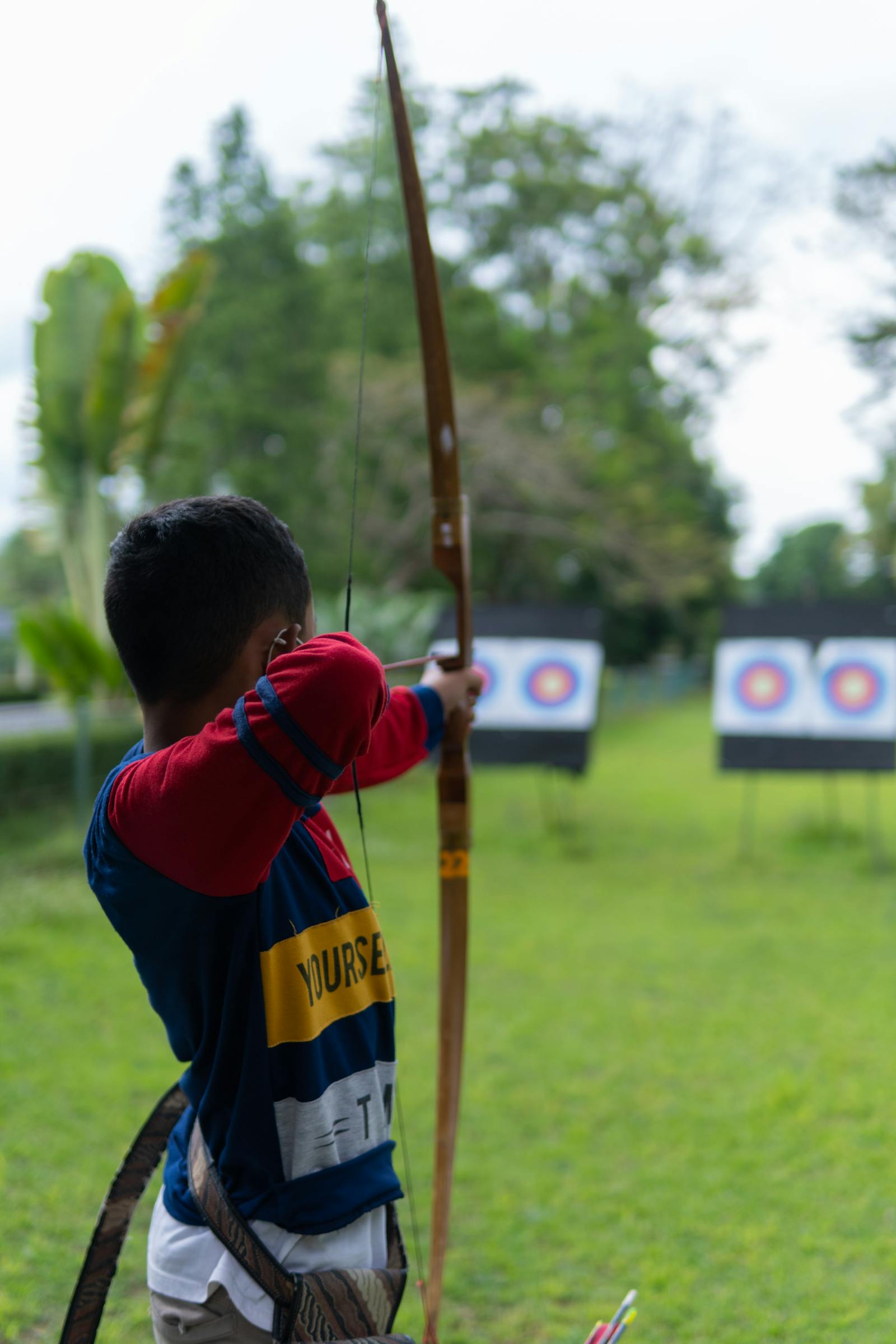
Part of the complete guide: How to improve your archery score
Physical preparation for archers rests on three principles: pattern specificity, isometric endurance, controlled asymmetry. An archer holds a static draw of roughly 18 to 20 kg for several seconds, dozens of times a day, so isometric endurance beats maximal strength. My selection is eight exercises, from band face pulls and isometric Y-T-W to external rotation and five minutes of daily thoracic mobility. Add two or three at a time, work them four weeks, and spread them across three or four short sessions.
The question I hear most often is simple: what should I do in the gym to shoot better? And the honest answer is not simple: it depends on age, technical level, bow draw weight, previous injuries, and the time available. What the research has identified, however, is a core set of exercises that produce measurable effects on aiming stability, shot consistency, and fatigue resistance.
Here are eight of them, with the rationale for each and concrete progressions. These are not every possible exercise, and they are not an official list the literature has voted on: they are my selection of the most useful and best documented. Before getting there, though, it is worth establishing three principles that guide the selection, and that should underpin any serious physical preparation program for an archer.
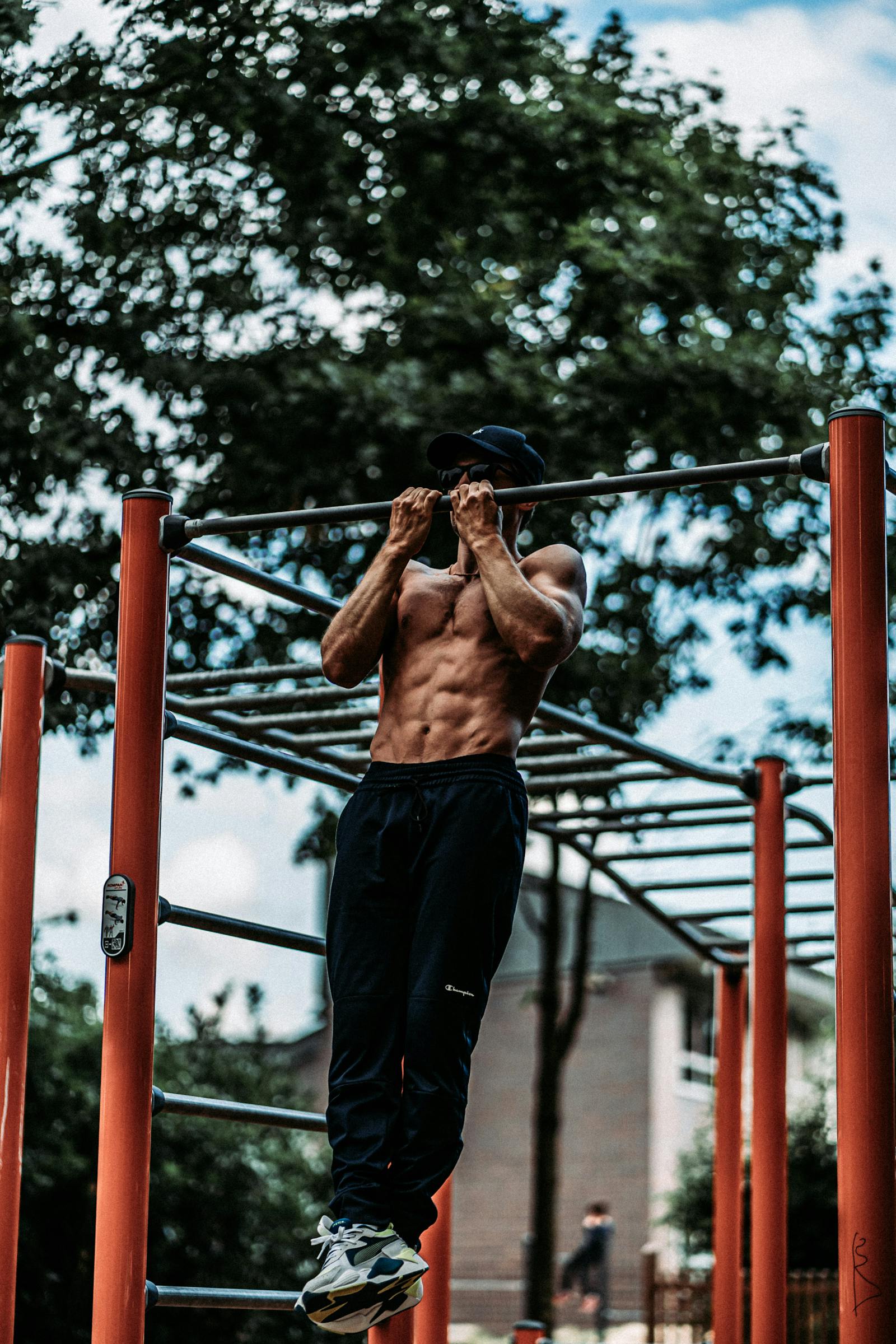
The three principles of specific physical preparation
Nearly every mistake made in preparing an archer physically stems from ignoring one of these three principles. They are easy to state and difficult to consistently apply, which is usually the real problem.
The 8 evidence-based exercises for archers
For each exercise you will find the biomechanical rationale, recommended volume, and expected effect. The right way to proceed is to introduce two or three at a time, work with them for four weeks, and only then add the next ones. Jumping into all eight at once produces nothing but overload and gives the body no time to adapt to one stimulus before the next arrives.
Band face pull
Resistance band anchored at face height, pulling toward the sides of the temples with elbows high. Targets the lower trapezius and rhomboids, the posterior draw muscles that sustain the shot.
Strengthening the lower trapezius and rhomboids improves the strength and stability of the posterior draw: this is one of the most well-documented foundations of shoulder prehab work for archers.
Isometric Y-T-W on the floor
Lying face down, arms extended to form a Y, then a T, then a W. Hold each position for 20 seconds, scapulae depressed and upper trapezius disengaged.
Trains the scapular stabilization synergy under conditions of upper trapezius inhibition, which is precisely the technical demand of a correct shot.
Plank shoulder tap
Standard plank, alternating a tap to the opposite shoulder with each hand. The torso must not rotate during the movement: that constraint is precisely where the benefit lies.
Combines anti-rotation core work with scapular control, the same function the core must provide during the bow draw.
External rotation with band
Elbow at the side, forearm horizontal, external rotation against band resistance, a movement that targets the infraspinatus and teres minor of the rotator cuff.
Weakness in these small muscles is one of the primary causes of bow-shoulder pain over the medium term and is well documented in competitive archers.
Contralateral dead bug
Lying supine with arms and knees at right angles, slowly extend the right arm and left leg together, then alternate, keeping the lumbar spine pressed into the floor throughout.
Trains anti-rotatory core stability in a way that is specific to the archery shot, where the torso must remain still while the arms work asymmetrically.
Horizontal row
Row with a neutral grip at a height that simulates the draw, using dumbbells, a barbell, or TRX. The movement is short and controlled, with focus on scapular activation.
Trains posterior draw strength in a pattern very close to the bow draw, with a measurable transfer to draw stability in archery.
Isometric hold with weight
Hold a light weight (1 to 3 kg) with the bow arm extended at 90°, replicating the draw angle. Start at 20 seconds and progress toward 45 to 60 seconds over time.
Isometric endurance in the shoulder and scapular stabilisers helps keep the aim steady as fatigue accumulates: in the final arrows of a set and in the closing stages of a long competition.
Daily thoracic mobility
Thoracic rotations on a foam roller or in a quadruped position with one hand behind the head. Five minutes per day, every day, as a non-negotiable minimum investment.
A stiff thoracic spine limits torso rotation during the draw, one of the most common and least recognised technical blocks in intermediate archers.
| Exercise | Frequency | Base volume | Primary effect |
|---|---|---|---|
| Band face pull | 3x/week | 3×15 | Scapular stabilization |
| Isometric Y-T-W | 3x/week | 3×20 sec | Posterior synergies |
| Plank shoulder tap | 3x/week | 3×40 sec | Anti-rotation core |
| External rotation | 4x/week | 3×12 per side | Rotator cuff |
| Dead bug | 3x/week | 3×10 per side | Core stability |
| Horizontal row | 2x/week | 3×8 | Draw strength |
| Isometric hold | 3x/week | 3×30 sec | Isometric endurance |
| Thoracic mobility | Daily | 5 min | Torso rotation |
Five common mistakes in physical preparation for archers
Even with the right exercises, a mistake in execution or planning is enough to turn a good protocol into a useless one, or worse. Five mistakes appear with regularity in archers who go to the gym without specific guidance.
Training only the shooting muscles
Concentrating the work on the trapezius, rhomboids, and lats while ignoring the core, mobility, and rotator cuff produces an unbalanced athlete.
The typical result is pain over the medium term and a performance plateau. Physical preparation for archers must be comprehensive, not focused solely on the primary movement pattern.
Loads that are too heavy
Bringing a bodybuilding or powerlifting mindset into archer preparation produces only generic mass, with no specificity.
In archery, endurance, control, and movement precision matter, not maximal strength. Moderate loads with a focus on quality produce better results.
No structured progression
Repeating the same exercises with the same volumes for months on end blocks adaptation, because the nervous and muscular system needs slightly different stimuli to keep adapting.
Correct progression comes through volume (more repetitions), hold duration (more seconds), or complexity (variations on the base exercise).
Skipping the small muscles
The small muscles of the rotator cuff produce no visible performance output, but together with scapular control they are what protects the bow shoulder, the site that gets injured most often: when the scapula and cuff work poorly, the space within the shoulder narrows and the typical overuse problems appear.
Skipping external rotation and scapular work to fit in more rows is a shortcut that tends to become expensive over the years of intensive training.
Cramming everything into one session
Doing all eight exercises in a single weekly session is less effective than distributing them across three or four shorter sessions.
The nervous system consolidates distributed stimuli more efficiently, and the accumulated fatigue from a long single session degrades the quality of the final exercises.
How to integrate gym work and shooting in the same week
One of the least discussed topics is how to make gym work and shooting volume coexist without undermining each other. The underlying rule is simple: a gym day is not a day for refined technique.
A good specific strength session leaves behind neural fatigue that, in the short term, degrades movement precision. Shooting in the hours immediately afterward means working with a system that is not at its best, with the risk of reinforcing altered patterns. The solution is to organise the week so that quality technical sessions and strength sessions do not overlap.
A sample week for an intermediate competitive archer might look like this: Monday, gym (exercises 1 to 4); Tuesday, intensive technical shooting; Wednesday, gym (exercises 5 to 7); Thursday, moderate-volume shooting; Friday, rest or mobility; Saturday, quality shooting with competition simulation; Sunday, rest or a walk. Thoracic mobility is done every morning, regardless of everything else.
The gym serves the shot. It does not replace it.
No gym exercise replaces the arrows needed to build the specific synergies of the shot. Physical preparation is a multiplier: it makes technical volume more effective and protects against injury, but it must remain in service of the movement, not compete with it for space.
A 12-week progression: where to start
Taking a protocol from theory to practice requires a progression, not a sudden plunge. Someone who has never worked on specific preparation should not begin with all eight exercises: they need to build gradually, week by week, giving the body time to adapt to one new stimulus before adding another.
The first four weeks are dedicated to introducing three foundational exercises: band face pull, plank shoulder tap, and daily thoracic mobility. Volume is reduced by 50% relative to the full working dose, two sets instead of three and durations halved, because the goal is to become familiar with the movement pattern, not to produce significant adaptation. Frequency is two sessions per week, with a full rest day between them.
From weeks five through eight, the Y-T-W, external rotation, and dead bug are added. Volume rises gradually to 75% of the working dose, while frequency becomes three sessions per week, each lasting 20 to 25 minutes in total. This is the phase where the first improvements in aiming stability during the final arrows of a technical session should begin to appear.
From weeks nine through twelve, the protocol is completed by adding the horizontal row and isometric hold, and volume reaches 100% of the working dose across all exercises. Sessions last 30 to 35 minutes and become a stable pillar of the week. From this point forward, progression comes through execution quality and small increases in volume or hold duration.
Injury prevention: the real ROI of gym work for archers
For a recreational archer, the pure performance gain from gym work is real but modest. The true return is something else: avoiding injuries, particularly to the shoulder, elbow, and lower back, the three sites that fail most often in archers at any level.
Among competitive archers, overuse of the bow-shoulder is the most common issue, followed by elbow complaints and the cervico-thoracic region. The available epidemiological literature does not support precise long-term incidence estimates, but the mechanism is clear: high volume, unmanaged draw weight, no physical preparation. And most of these injuries are preventable with physical preparation that is done properly and maintained over time, not with a week of exercises every now and then.
The three main protective mechanisms are rotator cuff strengthening (which dynamically stabilizes the humeral head), scapular control (which prevents abnormal compression in the sub-acromial space), and thoracic mobility (which reduces compensatory load on the lumbar spine during torso rotation). None of the three requires expensive equipment or long time blocks: 30 to 40 total minutes distributed across the week is sufficient.
The calculation is straightforward, because a shoulder overuse injury for a competitive archer can keep you away from your level for months: in elite youth archers, training-related pain lasts almost four months on average. Spending a couple of hours a week in the gym to avoid all of that is one of the highest-return investments an archer can make.
Individual differences: age, sex, draw weight
What I have described here is a general starting point, because in practice the best physical preparation changes according to certain personal variables worth considering.
Age shifts priorities considerably: under 30 the focus can be on building specific strength and isometric endurance, whereas between 30 and 50 the emphasis moves toward maintaining thoracic mobility and scapular stability, as the first restrictions begin to make themselves felt. After 50, the rotator cuff becomes the priority, loads should be reduced, and in return the frequency of stabilization exercises is kept high.
Sex influences typical starting points: female archers tend to have good scapular control but less absolute trunk strength, whereas male archers show the opposite pattern. Calibrating the program to the individual's starting profile accelerates results and avoids spending time on areas that are already strong while neglecting weaker ones.
Draw weight also changes the picture, given that a compound bow at 50 lb with 75% let-off demands a very different holding effort from a 40 lb Olympic recurve with no let-off. The preparation should be sized to the actual load the archer sustains in training, not to an abstract average valid for all archers.
An initial assessment with a trainer who understands precision sports is often worth more than months of generic exercises. Two or three sessions are enough to identify the specific weak points of that archer and tune the protocol toward the areas with the most room for improvement. It is an investment that makes all the subsequent work more effective and avoids wasting months on the wrong priorities.
Frequently asked questions
What kind of strength does an archer need?
Not maximal strength. For archery what matters is isometric endurance, control, and precision of the movement. An archer has to hold a draw on the order of 18 to 20 kg (less with a compound, because of the let-off) and keep the aiming position for several seconds, repeating it dozens of times in a session. The very exercises a weightlifter would do give you strength you do not need and take away mobility you very much do.
Which exercises actually train archery?
I suggest eight here, chosen because each one rests on a solid line of research: strengthening the lower trapezius and the rhomboids, the rotator cuff, anti-rotation core work, isometric shoulder endurance, and thoracic mobility. They are not an official list the literature has voted on: they are my selection of the most useful and best documented. The right way to go about it is to introduce two or three at a time and work on them for a few weeks, because throwing yourself at all of them at once only produces overload.
Why should you not train only the shooting muscles?
Because concentrating the work on the trapezius, rhomboids, and lats while ignoring the core, mobility, and shoulder produces an unbalanced athlete, with pain in the medium term and a performance plateau. The small rotator cuff muscles do not deliver visible performance, but together with scapular control they are what protects the bow shoulder, the site that gets injured most often: when the scapula and cuff work poorly, the space in the shoulder narrows and the typical overuse problems appear. Preparation has to be all-round.
What is the real benefit of gym work for an archer?
For a recreational archer the pure performance gain is real but modest. The true return is avoiding injuries, above all to the shoulder, elbow, and lower back. A shoulder overuse injury can keep you away from your level for months: in elite youth archers, training-related pain lasts almost four months on average. Spending a couple of hours a week to prevent it is one of the highest-return investments there is.
How do you fit gym work and shooting into the same week?
The underlying rule is simple: gym day is not fine-technique day. A strength session leaves a neural fatigue that, in the moment, worsens precision, and shooting in the hours immediately after risks working a system that is not at its best and fixing altered patterns. They have to be organised so that quality technical sessions and strength sessions do not step on each other.
Further reading. What you read here rests on the scientific literature. To keep the text readable I do not cite individual studies inline, but you will find the full reference list, over 120 studies and books, on the dedicated page.
Go to the bibliographySome things I take on directly.
I work on training and functional rehabilitation, on injury prevention and recovery, and on research. If you have a project or a collaboration in mind, or a question left over from what you have just read, write to me: I answer myself.