Part of the complete guide: How to improve your archery score
Before puberty strength comes from neural adaptation rather than muscle mass, so technique must take priority over draw weight. A study of 200 elite young archers at the European Youth Championship, average age 16.9, found 43.5% had experienced shoulder pain and 31.8% had stopped training through injury. The real risk in archery is chronicity, not acute trauma, and drawing too heavy too soon is the primary risk factor in adolescents. International-level archers shot more than national-level ones yet had fewer overuse injuries.
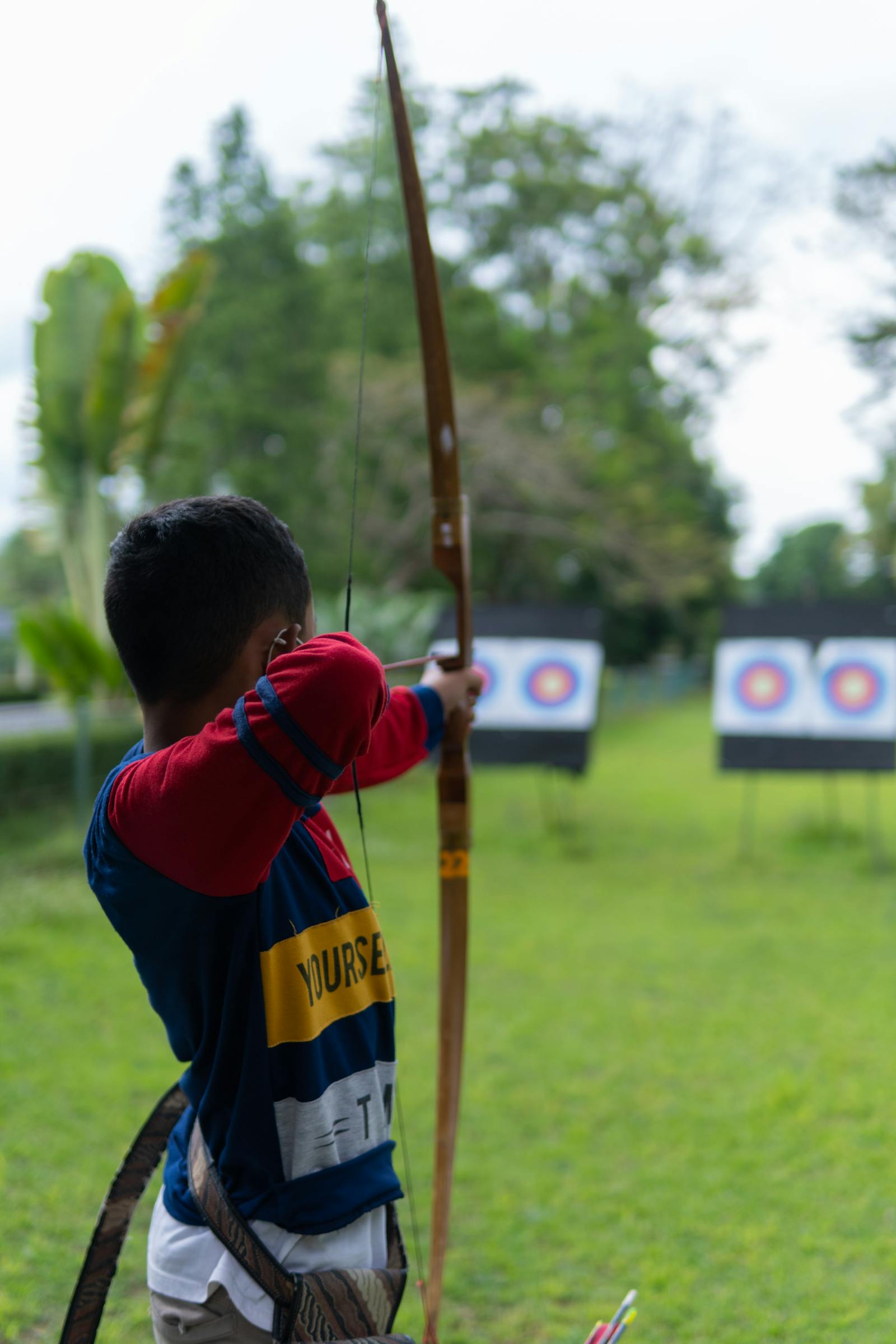
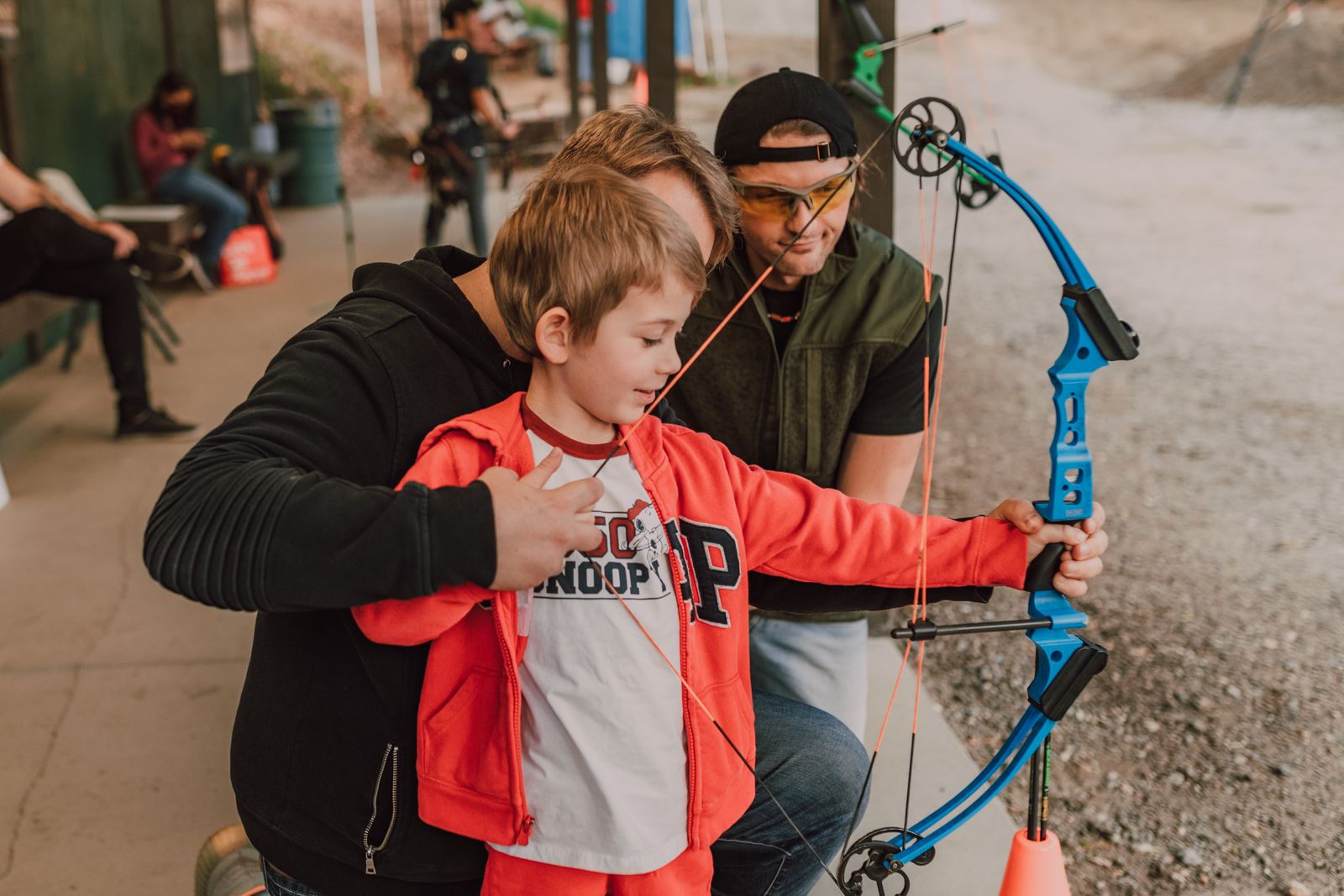
Every coach, sooner or later, gets the same question from a parent: my son is 8, can he start archery? Or, talking among instructors, you hear something like: I have a very promising 13-year-old, I want to train him hard right away. Both are legitimate questions, but the answers require a step that is often skipped: understanding that a child's body does not work the way an adult's does, even a small one. The differences are not a matter of degree, they are a matter of kind, and ignoring them leads, almost without exception, to problems that surface months or years later, once the damage is already done.
What follows is a structured overview of injury prevention in youth archery, written for parents and coaches. It contains no magic formulas about the right age, because there are none: what exists instead are biological principles that help make better-informed decisions.
A child is not a small adult: what actually changes
This phrase, a child is not a small adult, is a foundational principle of sports pediatrics. In archery, however, it is ignored with concerning frequency, so it is worth setting out what it means in practice, point by point.
The immature skeleton is the place to start: in children and adolescents the growth plates and apophyses are still maturing, on a timeline that varies by sex and anatomical region. They are the most vulnerable points of the growing skeleton, because they tolerate repeated loading less well than mature bone and early damage can leave lasting structural consequences. In archery, where load is chronic and asymmetric, that is not a minor detail.
Strength before puberty is mostly neural. Anabolic hormones such as testosterone are present in far smaller amounts than in adults, so muscle does not grow in the same way: strength still increases, but it does so through adaptations of the nervous system, as the body learns to recruit more muscle fibers, more efficiently and more quickly. The practical consequence is that strength gains in the prepubertal phase are real but do not depend on increases in muscle mass, which is why focusing on technical skill at this stage produces more durable results than chasing heavier draw weights.
Thermoregulation and hydration work differently. Children sweat less than adults and have a higher ratio of body surface area to body mass, so they absorb and lose heat more rapidly, while a smaller heart means a higher heart rate at any given effort level. They also perceive thirst less acutely and become dehydrated sooner, which during long outdoor sessions, especially in extreme heat or cold, becomes a real risk.
Anaerobic metabolism is different too. The anaerobic system in children is less developed than in adults, which is not a disadvantage but a physiological characteristic: it means they respond better to short, technical, intermittent work, with adequate recovery between sets. Long uninterrupted shooting blocks are not suited to the physiology of a young archer.
Age ranges: a practical guide, not a fixed rule
The literature outlines a priority framework by age range that I find useful as a reference point: it is not a rigid rule, because every child matures at their own pace, but it does show the order in which things are best introduced.
- Ages 6-10: the goal is to build foundational motor patterns. Play comes first. The bow, if introduced at all, should be a tool for exploration and discovery, not for performance.
- Ages 10-12: technique work can begin, but load stays low. Technical quality must always take precedence over draw weight, with no exceptions.
- Ages 12-14: this is often the period of peak growth velocity, a phase of particular vulnerability for the growth plates. Monitoring should become more attentive here, not less.
- Ages 14-16: volume and draw weight can be increased progressively, provided technique is solid and the body is responding well.
- Ages 16-18: consolidation, assuming the technical foundations have been built properly. Only from this point does it make sense to consider volumes associated with structured competitive training.
The clearest signal that emerges from the literature, and that I have distilled from it, is this: drawing too heavy too soon is the primary risk factor in adolescents. Not volume in itself, not frequency on its own, but a draw weight that is inappropriate for the athlete's level of skeletal maturity.
What the numbers say: the epidemiological paradox of archery
Archery is among the safest sports in the world when it comes to acute trauma: the incidence rate is very low. That statistic covers acute trauma, though, while in adolescents the damage almost always arrives by another route, that of repeated load.
A study conducted at the European Youth Championship on 200 elite young archers produced data worth reading carefully. The average age of the sample was 16.9 years, with an average competitive experience of 6.5 years. The main findings: 43.5% of athletes had experienced shoulder pain during training, 30% had taken medication to continue training, 52.3% had undergone physiotherapy, and 31.8% had been forced to stop training because of injuries. The average duration of pain was approximately 3.9 months.
These are young athletes supported by technical staff, not self-taught individuals, and yet nearly half of them had suffered shoulder pain. This does not mean archery is a dangerous sport for young people: it means the real risk is not acute trauma, it is chronicity, a risk that builds over time, arrow by arrow, when the foundations have not been laid properly.
Research on elite adult archers has found that overuse injuries primarily affect the shoulder, particularly on the drawing arm side. The interesting finding is the comparison between the two groups in the study: international-level archers, who shot considerably more, had fewer overuse injuries than national-level archers. Volume alone does not explain the risk. What explains it is the system by which that volume is managed: technique, periodisation, recovery.
Technique as a protective factor: not just performance
In archery, technique is most often discussed as a tool for improving scores and far less often as a tool for prevention, yet the literature is fairly clear: poor technique is one of the main predictors of overuse injuries in archers.
The shot is a chain of links running from the ground to the arrow tip, and when one link gives way, force redistributes abnormally across the others. The most common failure point is the trunk: when the core musculature fatigues, the archer loses scapular control. The line of force distorts, the humeral head tends to migrate superiorly, the subacromial space narrows, and the supraspinatus tendon becomes compressed. Over time, this mechanism produces the tendinopathies seen so frequently in archers' shoulders at every level.
For young athletes there is an additional problem: biomechanical faults repeated over a long stretch of adolescence tend to become ingrained, to the point where the neuromuscular system ends up encoding them as normal movement. Correcting them after years of repetition is far harder than building correct technique from the outset. This is one of the reasons why investing in quality technical coaching in the early stages is not a luxury, it is a necessity. One element that is frequently underestimated is scapular alignment: in young archers, the tendency is to compensate with the upper trapezius and the neck. It is an error that appears almost universally, and one that almost universally has consequences.
Training load in young archers: managing it without guesswork
One of the things that strikes me most when working with young archers is the near-total absence of load monitoring. There is a vague count of sessions, perhaps time on the field, but arrows per session, weekly volume, the ratio of recent load to habitual load: almost nobody measures these things.
The working principle I use is straightforward: arrow volume should not increase too sharply from one week to the next. It is a common-sense rule drawn from the literature on tendinopathies and progressive loading, which is not specific to archery but applies well to it. In young athletes, where the skeleton is still maturing and the neuromuscular system is still building its synergies, this kind of attention becomes even more important.
Fatigue in archery is often invisible before it becomes visible. After a certain number of arrows, muscle activation drops, fine coordination deteriorates, and compensatory asymmetries increase. It is not the hundredth arrow that causes the damage, it is the hundred-and-first, shot with a system already compromised by fatigue. The problem is that the young archer often does not know this, because pain has not yet appeared, and it is in those extra arrows that chronic overload is built.
Signals worth listening to: parents, coaches and athletes
A significant part of this work concerns the people around the young archer, since parents and coaches have different but complementary roles in prevention, and the first of those is noticing the signals.
The first signal that deserves attention is pain that persists beyond the session. Some muscle soreness is normal and resolves in 24 to 48 hours. Pain that lasts for days, that reappears predictably in subsequent sessions, or that leads the young athlete to modify their movement to compensate, is not normal and should not be ignored. The data show that in those elite young athletes, pain lasted an average of nearly four months before being addressed in a structured way, which is an entire block of the season spent shooting on a structure that was already asking for help.
The second signal is spontaneous modification of the movement pattern. When a young archer begins shifting head position, elevating the shoulder, or rotating the torso differently from usual, they are often not doing so consciously. They are doing it because something hurts and the body is trying to work around the problem. A coach who knows their athlete's movement well will notice this before the athlete mentions anything.
The third signal, more subtle, is a drop in motivation in a young person who was previously enthusiastic. This is not always a psychological issue: sometimes it reflects chronic pain that the athlete cannot or will not put into words, and that manifests as disengagement instead.
In young archers, the risk is not trauma. It is silent chronicity.
The most concerning finding in studies on elite young archers is not the number of acute injuries, which are rare, but the proportion of athletes who continued training through pain, sometimes with medication, without addressing the root cause. One in three young athletes taking pain relief to keep training is a systemic signal, not a matter of individual bad luck.
What can actually be done: conditioning and monitoring
The good news is that prevention does not require sophisticated resources or a great deal of time. A good starting point is a weekly protocol of just over an hour in total, spread across multiple sessions, covering scapular stabilisation work, core strengthening, and a structured warm-up before each session.
For young athletes certain priorities stand out, and the first is a structured warm-up: around ten minutes before each session, probably the intervention with the best effort-to-benefit ratio, given that the literature shows reductions in upper-limb injuries with well-designed active warm-up protocols. Skipping the warm-up is one of the most common causes of micro-trauma in the opening arrows of a session.
Work targeting the lower trapezius, in particular, has direct evidence in archery: progressive protocols over several weeks improve the activation ratio between the upper and lower trapezius. For young athletes, starting with resistance bands and progressing gradually is the safest route. On monitoring, the minimum I ask of any young athlete covers three things: a pain scale before and after each session (a marked increase is a signal not to dismiss), a daily arrow count diary, and attention to recovery sensations between sessions. None of it requires expensive equipment, only the consistency to record the data and to read it back every so often.
A conclusion without shortcuts
There is no universal answer to the question of what age to start. It depends on the child, their rate of maturation, how they are introduced to the sport, and the quality of the coach alongside them. What I can say, based on what the research has documented, is that an early start is not inherently a problem. The problem is an early start poorly managed: draw weight too high, volume without progression, technique sacrificed for results, no monitoring of the body's signals.
Archery adapts very well to young athletes, including very young ones: it carries low traumatic risk and it develops concentration, discipline, and body awareness. But precisely because it is a technical, repetitive, and asymmetric sport, it requires that the foundations be built properly from the beginning. A technical fault consolidated in adolescence can turn into a tendinopathy a few years later. A rushed load progression at 12 is paid for not long after, which is why slowing down in the early phases is the most reliable way to reach the ages that matter in one piece.
Further reading. What you read here rests on the scientific literature. To keep the text readable I do not cite individual studies inline, but you will find the full reference list, over 120 studies and books, on the dedicated page.
Go to the bibliographySome things I take on directly.
I work on training and functional rehabilitation, on injury prevention and recovery, and on research. If you have a project or a collaboration in mind, or a question left over from what you have just read, write to me: I answer myself.